
Who’s Carrying the Canoe?
How Role Clarity Moves Everyone Forward Together

If someone shared this with you, you can subscribe to receive future issues.
On a wilderness canoe trip, there’s no room for ambiguity. Everyone knows what they’re carrying, or you don’t make it to the next lake or river. Mission-driven leaders can learn a lot from that. In my work across arts, conservation, and journalism, I’ve seen how organizations are navigating more uncertainty than ever, including shifting funding landscapes and leadership transitions. In unpredictable, risk-averse times, being clear about everyone’s role is critical. But leaders, staff, and board members are often vague about who is responsible for what — and that vagueness is costing them more than they realize.
When you double-carry, you feel every extra step.
Decades ago, six of us embarked on a seven-day trek across seven lakes in Northern Ontario’s Temagami backcountry — the kind of trip where your only neighbors are loons and the occasional moose, and cell service is a distant memory. We were mostly first-timers, full of enthusiasm but short on planning. The canoeing part was easy. Our difficulties began once we got to the first landing, or portage. In Canada, portage trails connecting lakes and rivers are not paved walkways but rocky, muddy footpaths once used by First Nations peoples for hunting and travel. The group had to carry everything — canoes, food barrels, and camp gear weighing up to 80 pounds each — across challenging terrain to get to the next body of water. We made the mistake of not assigning jobs in advance, so when we arrived onshore everyone ran to grab something and started walking to the next lake. Because the group left some of the gear behind, we were forced to double-carry — and had to go all the way back to the first landing to get the rest. Everyone was responsible for everything, and we exhausted ourselves with our inefficiency.
After two such portages, we realized we needed to take a different approach. Every camper would need to take responsibility for a certain part of the trip. We each asked ourselves, What skills do I have, and what am I capable of executing successfully? One camper claimed the tent and sleeping gear — they were an experienced backpacker and knew exactly how to strap it all together. I took the bulky food barrel, trusting a pair of legs strengthened by decades of ice skating to handle the weight. Two others hoisted the canoe onto their shoulders — hockey players with the kind of balance you can’t teach. For the first time, we all left the landing together, walking single file down the trail with nothing left behind.
Over the years, we learned to spend enough time at the first landing to ensure that each camper knows their responsibility. This extends to the campsite, where everyone has an assigned role, and gets to work on their job immediately. I’m always the cook, so I prepare the meals. Somebody else takes charge of the gear, another camper finds firewood, and another sets up the tarps. The time we would’ve wasted on doubling back is spent enjoying each other’s company around the campfire. Of course, we help each other get our packs on and step up when our friends need assistance. But designating one person to be responsible for each item makes the trip so much easier.
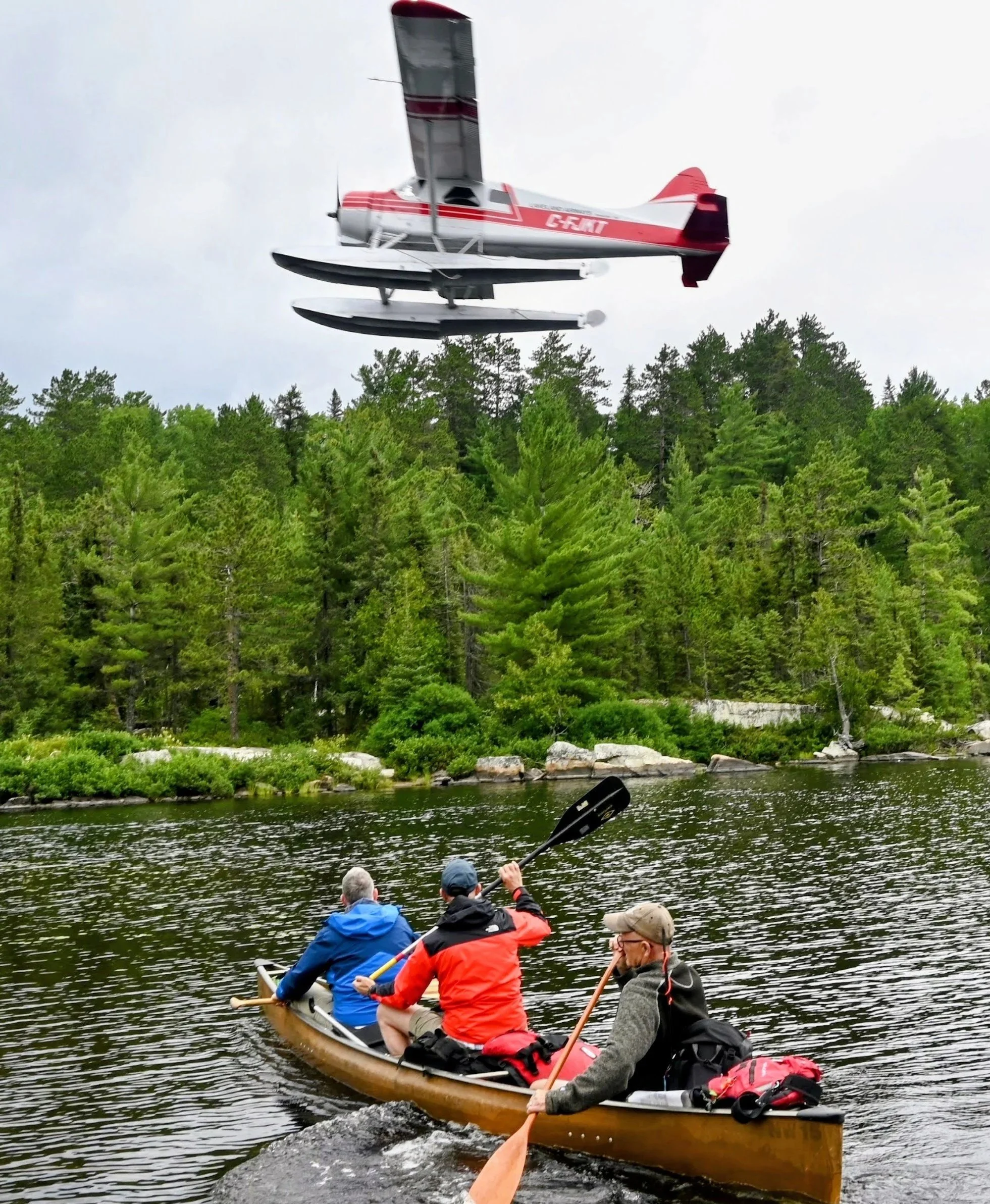
I even named my company Portage & Practice to show how backcountry canoeing informs my approach to leadership consulting.
From front to back of canoe: Rev. David A. Dubbeldam (husband), David B. Devan (me), and Dan M. Clarke (canoe buddy for 30 years) in Temagami Wilderness Area.
Float plan drop off provided by Lakeland Airways Ltd.
Your organization has a portage too.
As a mission-driven leader, you’ve identified your mission and have a strategic plan to achieve it. During good times, your team is all in the canoe paddling together — and responsibilities are just clear enough that you think you’ve got it all figured out. Then you reach the portage. It might be a crisis — your headliner gets sick, a big grant falls through. But it doesn’t have to be. Sometimes the portage is simply the next big thing your organization needs to do well — a technology infrastructure that actually connects your teams, a strategic plan that demands real coordination across departments. The trail ahead is long, the gear is heavy, and you need everyone moving forward together. That’s when vagueness costs you. If you haven’t been specific about who is responsible for what — and especially who is responsible for making sure it all fits together — your team ends up double-carrying. Multiple people grab the same pack. Gear gets left at the landing. Everyone is working hard, but the group isn’t making a single, clean carry to the next lake.
Assign responsibility before you hit the trail.
I recently worked with the leadership team at a major arts festival on something every mission-driven organization cares about: patron experience. The marketing team was shaping it. Development was shaping it. Front of house, facilities, even the team managing artist interactions after performances — they were all shaping it. But no one had been designated as the single person responsible for making sure all of those pieces came together as one seamless experience. It’s the difference between everyone on the portage trail carrying their own pack, and having a trip leader who makes sure the whole group moves forward in a single carry. Each person still owns their load, but someone stands at the shore, looks at the full picture, and confirms that every item is accounted for before the group sets off. Once we named that role at the festival — one senior leader responsible for connecting all the parts — we created the conditions for something new. The individual leaders didn’t lose ownership of their pieces. They gained a clearer view of how their work connects to everyone else’s. Ideas that used to get stuck between departments now have a path forward. And the organization is set up to deliver the kind of coordinated, integrated experience that matches the quality of what’s happening on stage.
In Practice: One Move to Consider this Month
Name one thing your organization must deliver well right now. Who is responsible for it — really? If more than one person comes to mind, that's your signal to clarify — before you hit the trail.
Monthly Inspirations: Performances & Events Feeding My Thinking
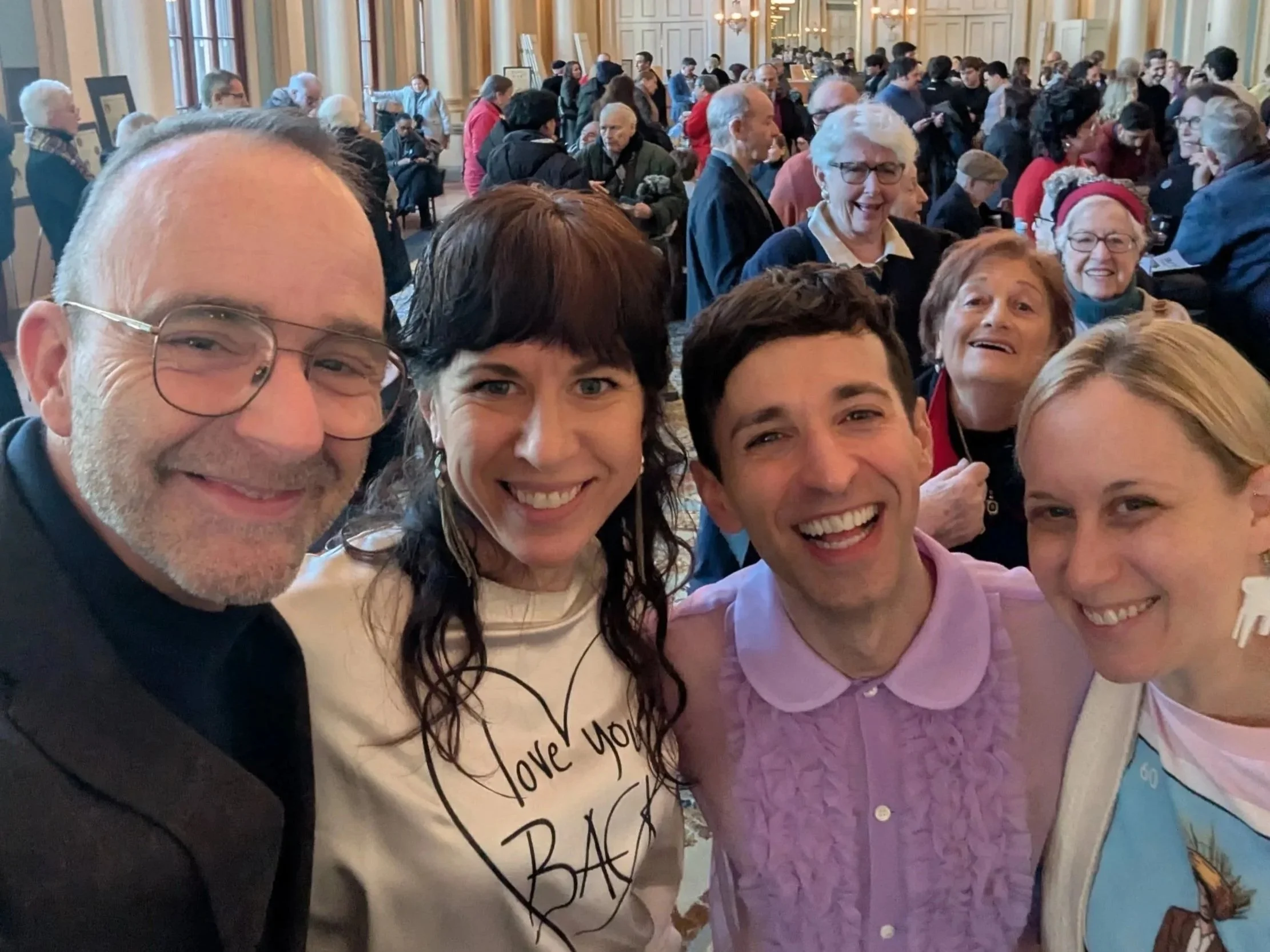
Complications in Sue
This compilation by 10 composers and one brilliant librettist was audacious and occasionally outrageous. Perhaps most impressive was how each composer’s voice was evident but they all worked together cohesively. A perfect representation of role clarity in collaboration!
With Missy Mazzoli, Anthony Roth Costanzo, and Jessica Mazzoli at Complications in Sue.
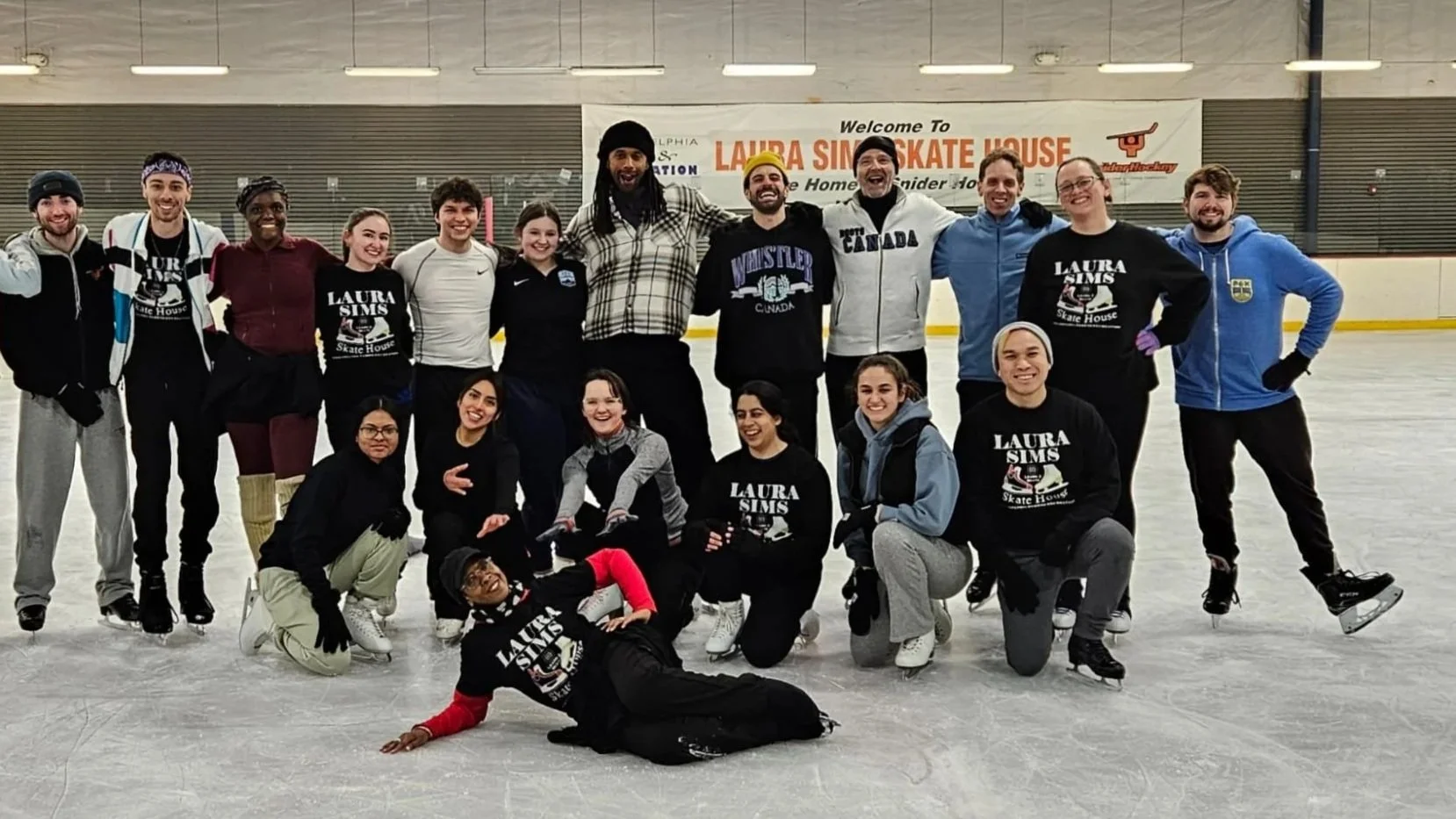
Ice Skating Seminar by Le Patin Libre
I skate most weekends in Cobbs Creek, and was thrilled to participate in a session by this pioneering Montreal-based contemporary ice skating company. We practiced a type of ensemble skating called flocking — a fun reminder that even longtime solo skaters benefit from understanding their role in an ensemble.
Flocking practice with Le Patin Libre at Laura Sims Skate House in Cobbs Creek.

50th Anniversary Events for William Way LGBT Community Center and Philadelphia Gay News
As some try to erase the LGBTQ community, celebrating milestones for these legendary institutions is a radical act of community. I was lucky enough to sit with founders of both organizations, which filled me with so much joy and resolve as I reflected on the challenges we’ve overcome over the last half century.
Pennsylvania Governor Josh Shapiro speaking at the 50th anniversary celebration of Philadelphia Gay News.

The Bread Room
My husband is allergic to gluten, so I can’t bake bread at home. Thankfully, I’ve discovered the best bread place in Philadelphia. When you walk into Ellen Yin’s new spot it feels like you’re in a community gathering place, which is the best part of coming together to share food with one another.
Pullman bread from The Bread Room with farm fresh eggs — YUM.
If this newsletter was useful, feel free to share it to someone who might enjoy it — or subscribe so you don’t miss the next issue.