

Devantage Point
Field Notes for
Mission-Driven Leaders
The Art of The MacGyver
On a wilderness canoe trip, there’s no room for ambiguity. Everyone knows what they’re carrying, or you don’t make it to the next lake or river. Mission-driven leaders can learn a lot from that. In my work across arts, conservation, and journalism, I’ve seen how organizations are navigating more uncertainty than ever, including shifting funding landscapes and leadership transitions. In unpredictable, risk-averse times, being clear about everyone’s role is critical. But leaders, staff, and board members are often vague about who is responsible for what — and that vagueness is costing them more than they realize.
Improvisation as a Leadership Tool

If someone shared this with you, you can subscribe to receive future issues.
Every summer I live my brand by setting a playful out-of-office email and disappearing into Algonquin Park in Ontario, Canada, for a backcountry canoe trip. This year I brought my nephew Josh for his 40th birthday, because he wanted to relive the adventures we had when he was a teenager.
On the first day of the trip, we meticulously planned our itinerary to get out on Smoke Lake by 6 a.m. It’s important to take advantage of the calm water early, because the wind picks up later in the day. But when we arrived at the docks, we faced an impenetrable blanket of fog that limited our vision to just a few feet in front of us. We had no choice but to wait for conditions to improve.

A solitary loon and fog greeted us on the lake at 6 a.m.
After a couple of hours, the fog lifted and we set off. As we paddled under the wide open sky, I felt a huge weight lift off my shoulders. The fog hadn’t been in the original plan, and neither was much of what came next.
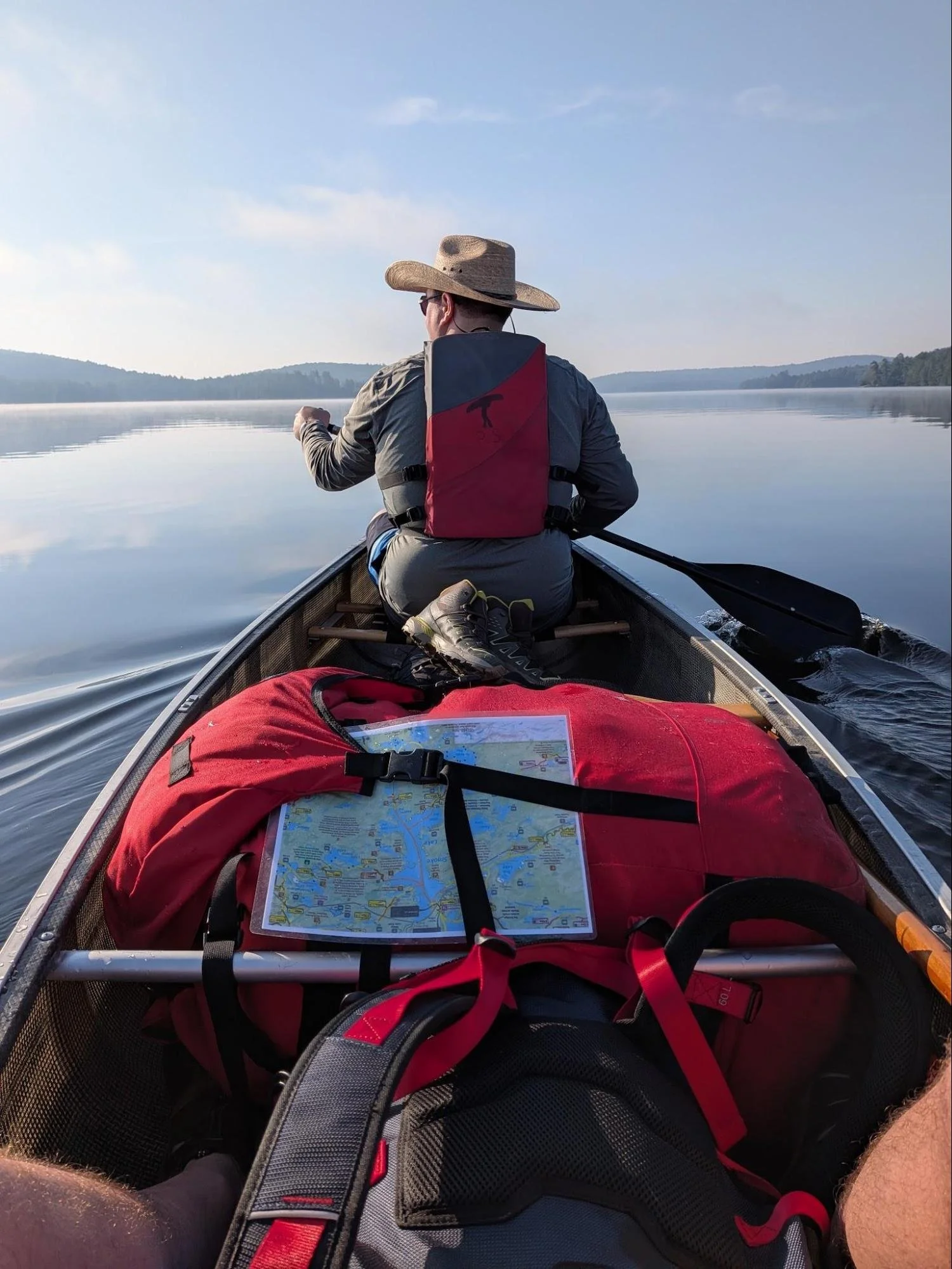
Two hours later, as the fog cleared, this was my view from the stern—and our journey officially began.
When the least experienced person has the best idea
Because I’ve done this canoe trip countless times, I’ve perfected my routine with my husband David and an assorted group of friends and family. We either get dropped in by float plane or launch from a dock to kick off a loop around the lakes. We keep an ambitious schedule — sleeping in a different camp every night. Years ago, we tried having rest days, but we hated it. Once we got into a rhythm we wanted to keep going.
Fast forward to this year. David couldn’t make it to Ontario, and Josh was rusty because he hadn’t camped in a while. He found the idea of lugging our gear from place to place daunting. Josh suggested we try something very different: a “base camp” trip where we slept in the same location every night. I was skeptical but agreed to try it.
We chose Big Porcupine Lake for our home base and set off on a new adventure each day — leaving most of our gear at the campsite. This plan turned out to be fantastic, and much less physically demanding. I can see myself doing it for many years to come. At night, we’d sip a Scotch Josh had chosen to pair perfectly with the campfire. As a long-time Scotch guy, I was impressed — I hadn’t tried this one before.
I had spent years perfecting a camping routine that worked. Because Josh hadn’t learned that routine, he invented a better one. The people in your organization who don’t know how things are “supposed to be done” can be your best source of inspiration — if you’re willing to try a new approach.
The MacGyver touch
The night before our first excursion from base camp, I tossed and turned. I felt apprehensive about balancing the canoe. Because Josh and I have a significant weight differential, it would be impossible to keep it level without the heavy gear we had on the way to base camp. I felt pressure to find a solution because I really wanted Josh to have a great time. This anxiety makes its way into my work as well — I still get nervous before facilitation sessions even though I present to groups all the time.
One way I cope is by channeling MacGyver, the iconic TV hero famous for solving impossible dilemmas with duct tape and a Swiss Army knife. Thankfully, my MacGyver skills kicked in before dawn. I woke with a thought: just throw the food barrel in the canoe and add the pots and stove for extra weight — compact, heavy, and all the gear we need for the day. We’d have to hang it away from the bears anyway, so we might as well use it as ballast. The barrel balanced the canoe perfectly and off we went. And we ended up with a full menu of lunch options on the route.
This was a reminder that improvising new ways of doing things is key to success on the water and off it. If we’d just sat in camp, I would have felt defeated by my worries, and we would have missed the adventure we both treasured. On canoe trips I always center my inner MacGyver — I tend to push through initial anxieties to adapt, improvise, and make the best of whatever situation we face.
Josh named my new bug net setup the “MacGyver 2000.” It took half a day to figure out — just ropes, trees, and me. So much fun.
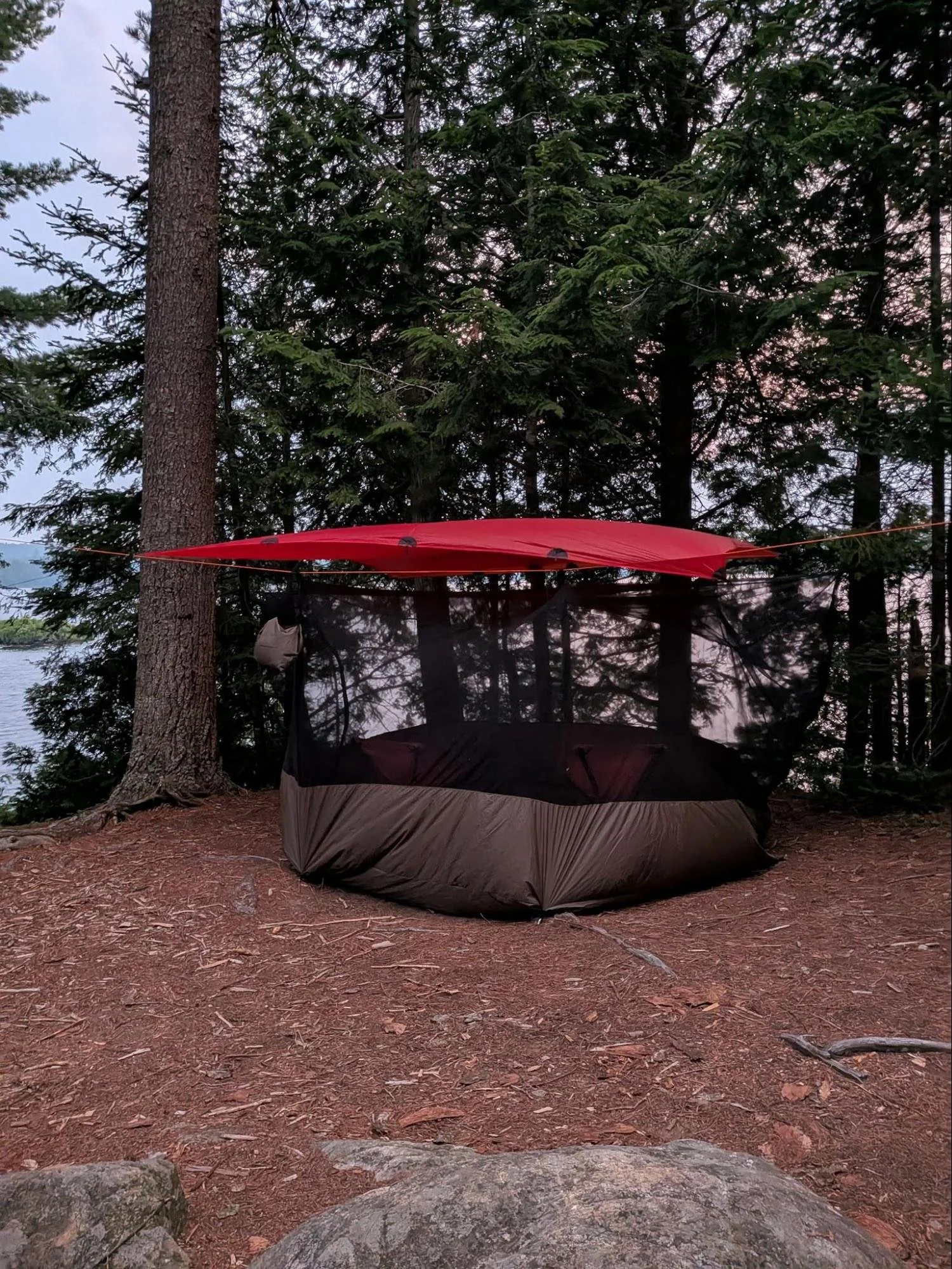
Enjoying bug-free, rain-sheltered wilderness living with our homemade “MacGyver 2000” setup.
The same MacGyver attitude serves me in my client work. Mission-driven leaders face impossible situations without enough resources. But when they give themselves and their teams permission to improvise, they discover they can do a lot more with less.
What makes improvisation feel safe
Everyone assumes I do these trips for solitude, to get away. But I do it for the camaraderie. It’s easier to create deeper human connection and build trust when the usual distractions are stripped away. You try things you wouldn’t normally because no one is judging. On this trip, that meant shaking off wrong turns rather than dwelling on them.
This year we had a three-hour detour because I was certain there was a campsite around the corner, and it was right beside us the whole time. But Josh just laughed it off: "Well, I saw part of the park I've never seen before."
This level of trust is what makes improvisation possible and enjoyable rather than terrifying. Josh didn’t need a perfect route. He just needed a partner he trusted. Build that into your organization, and see what your team discovers.
In Practice: One Move to Consider This Month
Choose one problem your organization has been overthinking. What’s the cheapest, fastest, most imperfect version of a solution you could try in the next two weeks? That’s your MacGyver move.
Monthly Inspirations: Performances & Events Feeding My Thinking
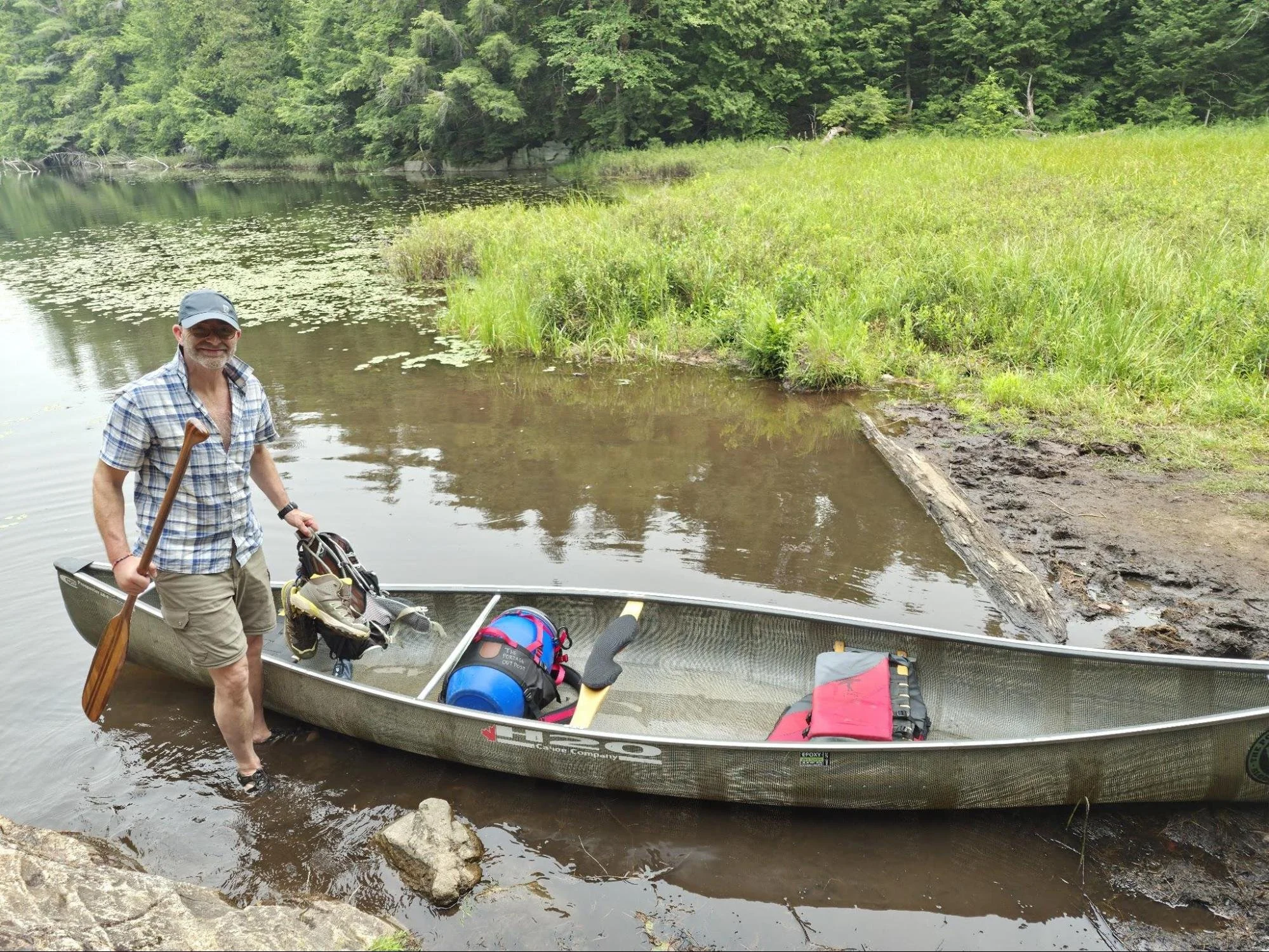
Starting out on a day trip portage, using a food barrel packed with meals and kitchen equipment as ballast.
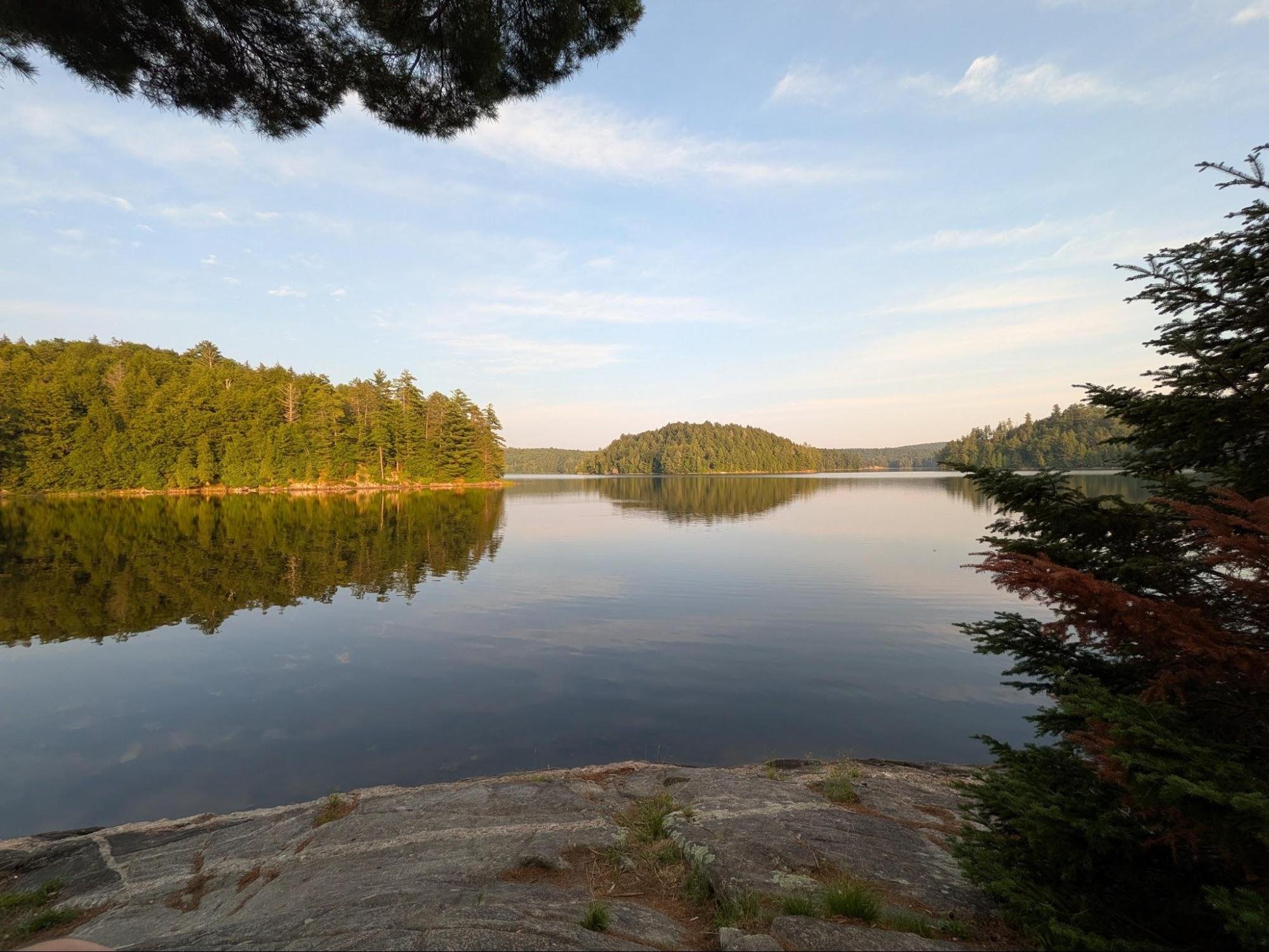
Base camp
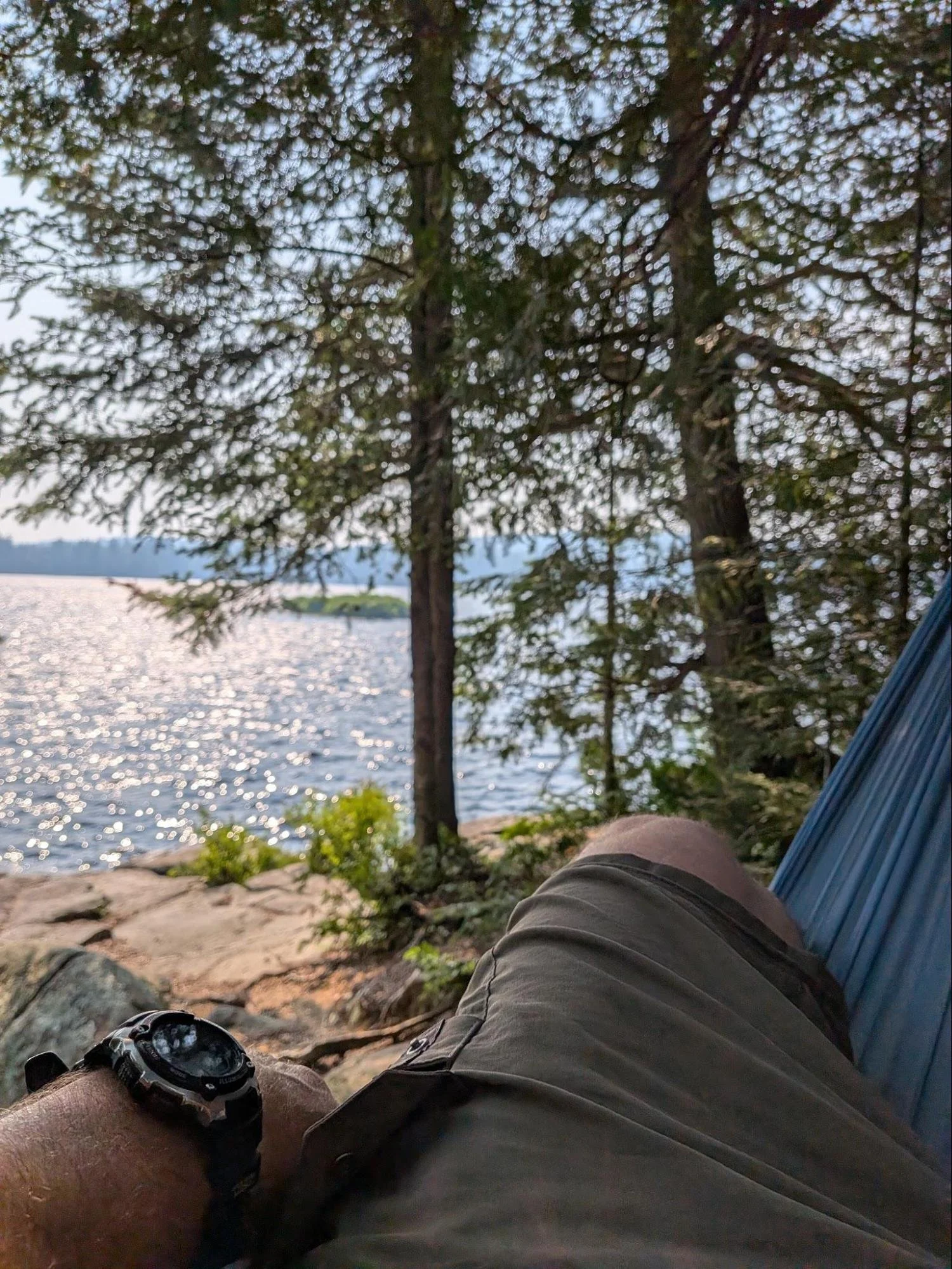
An improvised midday nap spot in the hammock
If this newsletter was useful, feel free to share it to someone who might enjoy it — or subscribe so you don’t miss the next issue.
Creative Contagion
On a wilderness canoe trip, there’s no room for ambiguity. Everyone knows what they’re carrying, or you don’t make it to the next lake or river. Mission-driven leaders can learn a lot from that. In my work across arts, conservation, and journalism, I’ve seen how organizations are navigating more uncertainty than ever, including shifting funding landscapes and leadership transitions. In unpredictable, risk-averse times, being clear about everyone’s role is critical. But leaders, staff, and board members are often vague about who is responsible for what — and that vagueness is costing them more than they realize.
When Dito van Reigersberg died in June, I didn’t know how to write about it. He brought such a light into every room as a performer and as a dear friend. At 53 years old he had so much work still ahead of him as Martha Graham Cracker and as a creative force behind Pig Iron Theatre Company.
Dito was an extraordinary artist, but he was also an extraordinary leader. In the end, that’s what I decided to write about. What he built with Quinn Bauriedel and Dan Rothenberg at Pig Iron Theatre Company has so much to offer every mission-driven leader.
The August issue of Devantage Point is my attempt to honor that. It’s about creative contagion, a quality that Dito had in abundance. It makes people want to be in the room, give their best, and go out and build something of their own.
If someone shared this with you, you can subscribe to receive future issues.

What Dito van Reigersberg Taught Us About Leading
When someone passes, we want to take a lesson from their death to carry forward in our own lives. In the case of Dito van Reigersberg, that’s both easy and impossible. It’s easy, because he left so much behind. But it’s impossible, because no single lesson or tribute could capture all that he gifted us in his far too brief life.
Since Dito died, fans, colleagues, and critics have rightly memorialized his stage persona, Martha Graham Cracker, and his pioneering work as cofounder of Pig Iron Theatre Company. He was also a dear friend, someone whose light shone brightly every time he showed up for us.
Here I’d like to shine a light on a lesser-known side of Dito’s legacy: his impact as a leader and institution builder. Far too often, creatives must ask for permission to do things. Over more than three decades, Dito helped create a generative environment where asking for permission was beside the point — artists simply created.
Pig Iron cofounder Quinn Bauriedel put it this way: “Dito felt like Martha Graham Cracker gave him permission to do things that he couldn’t do in any other setting. Part of what made it so otherworldly is you saw somebody who was just uncensored and spontaneous.”
The word I keep coming back to is contagion. Not clinical, but creative. Contagion makes people want to be in the room with you, give their best, and then go out and build something of their own. Dito certainly had it, and Pig Iron nurtured it. Thirty years later it’s spreading through the artists the company has trained and sent out into the world.
Ahead of Pig Iron’s memorial performance for Dito on September 27, I talked with Quinn about how we can continueDito’s work by intentionally creating environments for contagion so more visionaries like him can thrive.
Cheap rent was their first grant
Slack, or breathing space, is an essential element of creative infrastructure, but rising costs price artists out of many urban areas.
In the mid-’90s, when Dito, Quinn, and Dan Rothenberg finished at Swarthmore College, they and a handful of fellow recent grads felt called to test in the “real world” the ideas that had been so special in college. For the first few years, their lives converged in the summers — making shows and carrying them to the Edinburgh Fringe Festival in Scotland. Then came the decision every young ensemble faces: where, and whether, to commit full-time. They considered several cities, but the stars aligned in Philly after their first performance at the brand-new Fringe Festival in 1997. “We felt such a welcome embrace, so we decided to commit to living here for a while,” Quinn says.
The low cost of living gave them the time and space to keep nurturing those seeds. “For $1,000 total, five of us could live in a six-bedroom house with two kitchens in West Philly,” Quinn says. “We worked to pay our rent for just three to four hours a day and could rehearse for six to eight hours.”
Finding the real why
Because I was close to Dito and a fan of Pig Iron, I facilitated a strategic dialogue around the group’s core purpose. Back then, their mission statement was indistinguishable from any other regional theater — competent but completely forgettable. Then someone said the truth out loud:
“I'm here because I want to reinvent American theater.”
Dito, Quinn, and Dan coalesced around this bold mission. Through the power of contagion, they would go on to achieve that dream and more. The OBIE-winning company advanced modern devised theater, which centers on improvisation rather than set scripts, and took their experimental productions around the world. They then took it a step further, scaling their workshops into a school offering MFA and certificate programs that has trained more than 180 alumni.
The impossible idea is the right one
The group’s goal at the beginning was not to form a company. It was to work together for a summer, make a play, and take it to Edinburgh Fringe. At the time, the likelihood of a band of recent college grads crossing the Atlantic to one of the most competitive theater festivals in the world seemed far-fetched.
But they went, learning the rules by breaking them. They debuted a two-hour adaptation of Homer's Odyssey — with an intermission — at a festival where the smart play was an hour, tops. After an amazing review, their audience went from six people to eighty overnight.
“There's just something about a big hairy audacious goal,” Quinn says. “When you have something that sounds impossible and daring and important, people tend to rally around and say, hey, I’d love to be a part of that.” He gives his grad students the same advice today.
Admin as means, not end
In the beginning, the trio took a deliberate and steady approach to grow Pig Iron, relying heavily on grants. “We were very fortunate never to be in a situation where we lived and died by ticket sales,” Quinn says. A year in, they secured their nonprofit status.
The three founders took on a lot of the administrative work in the early years to avoid becoming beholden to the system they created. "The benefit was that we got to make the work we wanted to make," Quinn says. The group stayed focused on the end goal of creating art, which fueled the contagion — attracting performers and even administrators who were all deeply connected to the art itself.
To encourage collaboration and prevent silos between art and admin, Quinn advises leaders to focus on communication across the organization. "Make sure the administrators know that they’re a huge part of making all of this happen, so they can have a lot of pride in it too."
Dito’s enduring legacy
Quinn and Dito were college roommates, best friends, and artistic collaborators. “Losing him is so gutting on so many levels,” Quinn says. “Dito was so fun — the most playful person.” And that playfulness had staying power. One piece Dito helmed, I Promised Myself to Live Faster, took four and a half years and 17 versions to reach its final form. “He had this incredibly optimistic buoyancy,” Quinn says. “He loved all of the versions.”
But what made Dito truly rare wasn't just what he brought — it was what he drew out of others. “A little secret of Pig Iron that keeps things alive is trying not to repeat yourself,” Quinn says. “In the rehearsal room I’d say to Dito, ‘oh my gosh, I've known you for 36 years, I’ve never seen you do that.’”
Dan deserves credit for pushing him there. “Part of the work of an ensemble is that we don’t want to just see somebody do the same thing that they did five years ago. We want to see them stretch and be a different kind of actor,” Quinn says.
This is contagion at its best. It’s when your practice makes everyone around you more alive, more willing to reach, and more capable of surprise. Dito had that in abundance, and he shared it freely.
It lives on in the DNA of Pig Iron and in all of the artists whom Dito touched, and in every leader who creates a room where people stop asking for permission and simply create.
Quinn said it best at the end of our conversation: “Keep the art at the center. If you keep your mind on the more important end goal, you’ll gather people around you who can help see that as well.”
Dito did that for 30 years. The rest of us have work to do.
In Practice: One Move to Consider this Month
Read your mission statement aloud with your team. If it could belong to any organization in your field, ask what you actually want to change — and write that down. Then ask: what would your team attempt if it stopped asking permission?
Monthly Inspirations: Performances & Events Feeding My Thinking
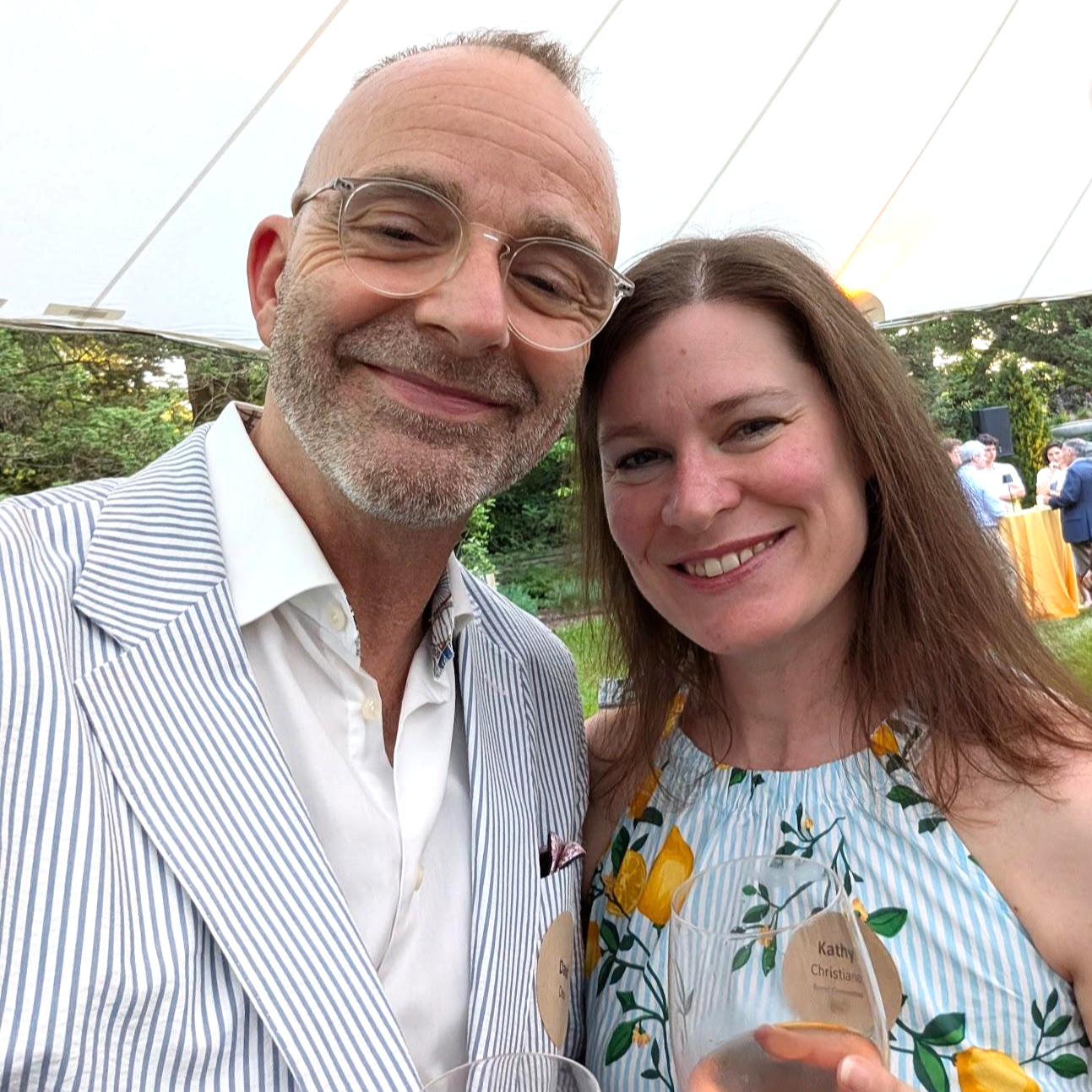
With Kathy Christiano of the William Penn Foundation at Natural Land’s Stardust! An evening celebrating inspiring conservation and exciting new initiatives to come at Stoneleigh: A Natural Garden.
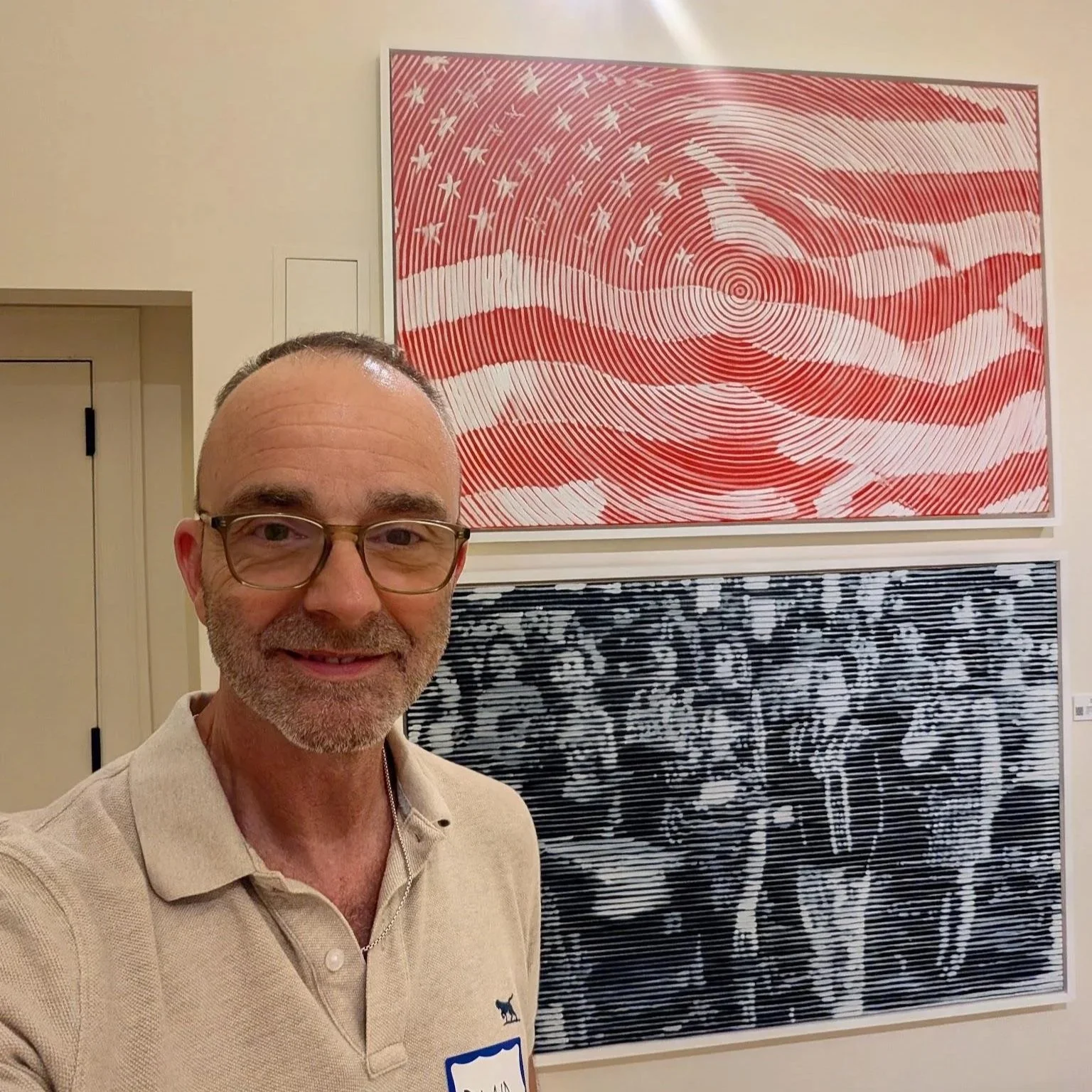
Christopher Vazquez’s Allegiance (2024) as part of Democracy: United We Stand at Philadelphia Museum of Jewish Art in Congregation Rodeph Shalom.
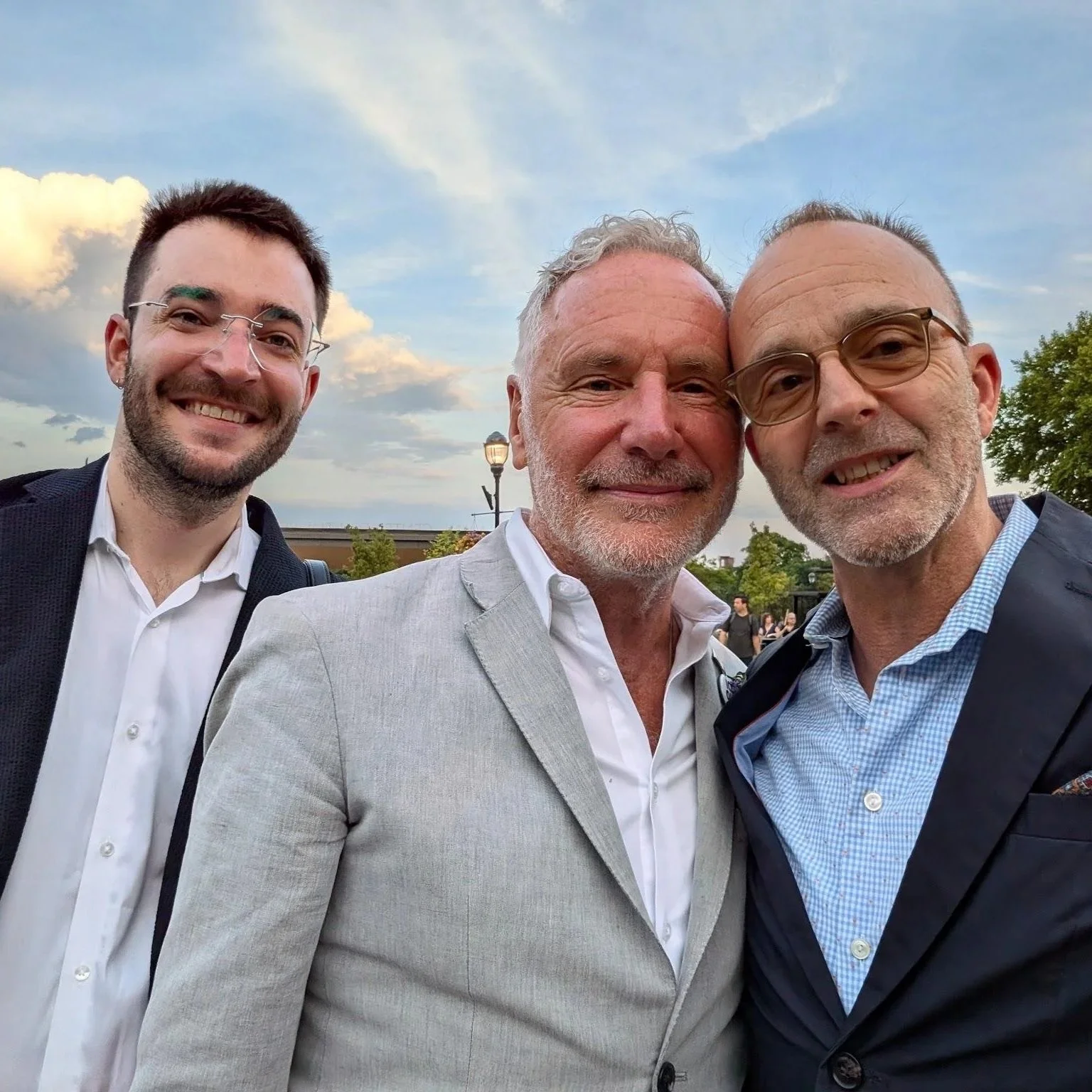
At Boyer and Campbell’s A Hundred Years On at the Highmark Mann (left to right) Clarke Sondermann and librettist Mark Campbell outside the newly renovated grounds. Both the performance and the grounds were wonderful.
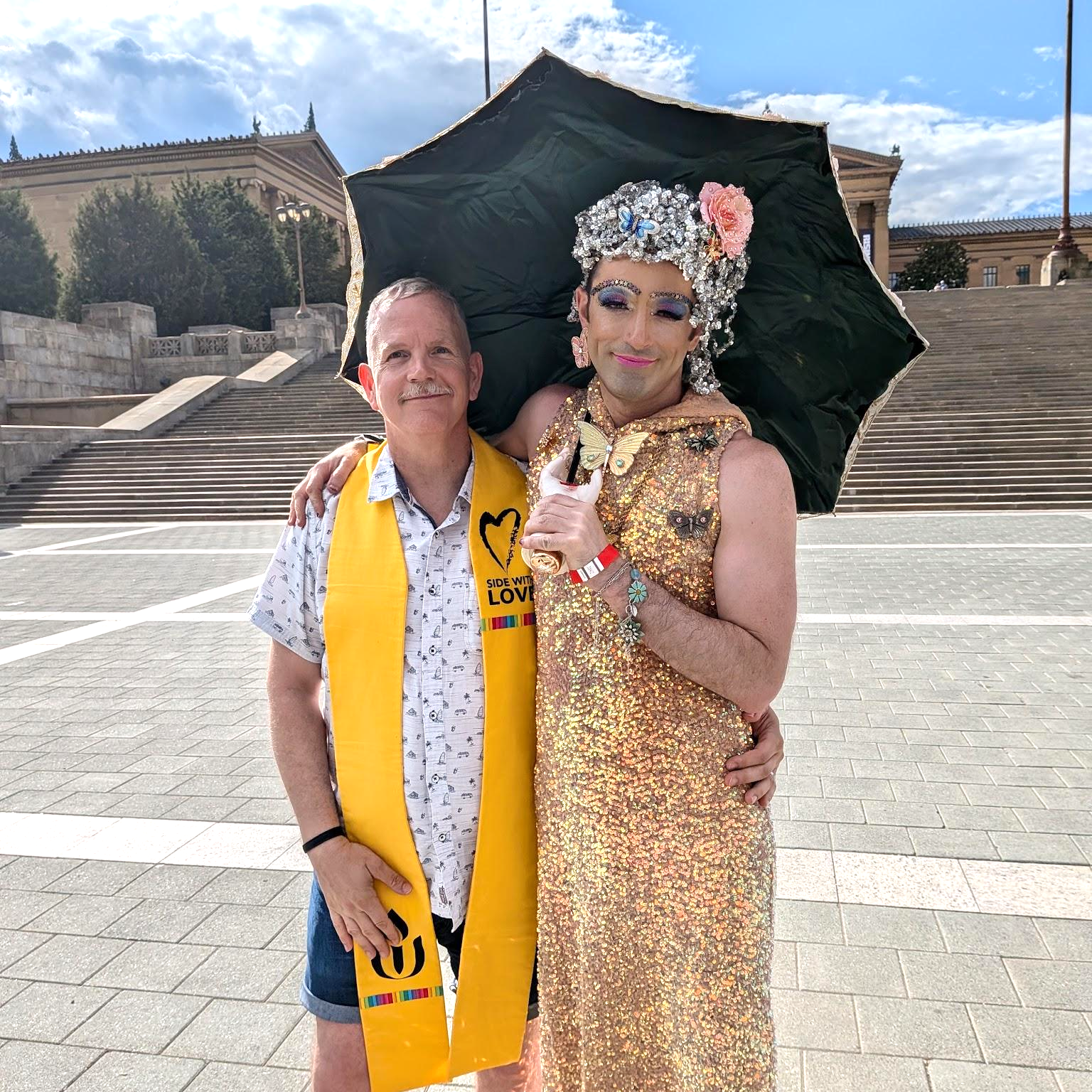
The dynamic duo of Reverend David A. Dubbeldam (my husband) and Rose Jarboe backstage at the Pride Stage to share memories and a prayer of remembrance for Dito.
If this newsletter was useful, feel free to share it to someone who might enjoy it — or subscribe so you don’t miss the next issue.
The Power of Creators
On a wilderness canoe trip, there’s no room for ambiguity. Everyone knows what they’re carrying, or you don’t make it to the next lake or river. Mission-driven leaders can learn a lot from that. In my work across arts, conservation, and journalism, I’ve seen how organizations are navigating more uncertainty than ever, including shifting funding landscapes and leadership transitions. In unpredictable, risk-averse times, being clear about everyone’s role is critical. But leaders, staff, and board members are often vague about who is responsible for what — and that vagueness is costing them more than they realize.
What the Creative Process Teaches Mission-Driven Leaders
If someone shared this with you, you can subscribe to receive future issues.
I went to London to observe. I came home inspired.
This spring, I attended workshops for I Dream, a new musical in development that received its UK concert premiere at The Other Palace in London. The piece takes place during the American civil rights era and centers on the relationship between Martin Luther King Jr. and Ralph Abernathy, his close friend and advisor.
The experience reminded me that you don't have to be an artist to be fed by the work. Even though I was in the room as a creative advisor, not a performer, it was just as nourishing as if I had been on stage. I left each session energized — the music stayed with me for days afterward. I was moved more deeply than I expected. You cannot sit a few feet from artists giving voice to Dr. King and Rev. Abernathy without feeling something shift. Most surprising of all, I never felt like a spectator. Watching the work take shape, I felt like part of its creation. And when I returned to the U.S., I noticed the difference in my own work: I was more patient and more present — less reactive to the daily noise, more able to hold myself and my clients to the longer arc of the mission.
In a time when we have to invent the future, creativity isn't a luxury — it's a critical leadership tool. Finding a creative outlet makes you a happier person, a better neighbor, and a more successful professional.
What the Workshops Taught Me
What struck me most about the I Dream workshops was that the team solved hard problems with music and collaboration. I heard zero complaints as they worked difficult passages until they landed, because they were completely focused on the work itself and did not sweat the small stuff.
Trust ran through the whole creative team. Douglas Tappin, the composer, librettist, and lyricist, built a world expansive enough for the artists to live in. Annabel Mutale Reed, the director, gave them just enough guidance that they still had room to find the roles themselves — she handed them a score and trusted them to play it. And Keith Williams, the music director, worked the hardest passages until they sang, without ever draining the joy from the room. Three different roles, one shared discipline: create the space, then trust the people in it.
When you bring people together in a workshop, you are using the same muscle as when you solve an organizational challenge: motivating people, working a problem, and staying on a journey toward something you can't fully see yet. You have to believe in your team and keep your eye on your mission so you don't get sidetracked by minor distractions.
The joy of creating is also a powerful tool in itself. When you're assaulted by barriers and challenges every day, joy is what helps you show up — guiding you and the people around you forward, and even healing divisions. Contrast this with how many nonprofit leaders operate: in survival mode, with no capacity to see beyond the immediate. They rarely give themselves access to the joy that can fuel them.
Another lesson I took home from London was that the work isn’t done until it meets an audience. The I Dream team brought people in to see it — because they wanted to hear their immediate reactions and what stayed with them after the performances. The joy of creative work compounds in community — the effect is exponential when it's shared, not done in isolation. That’s what effective leaders are really about: creating space for others.
Permission to be Expressive
Unfortunately, many nonprofit leaders forget about taking care of themselves. But allowing room for creative experience would be good for them as humans — and would make them better at their missions, too.
What I’m really talking about is the urgent need for leaders to find their expressive selves. If you’ve been lucky enough to find that through creative acts, you know the release it brings. This ability directly correlates with your ability to lead, because successful leaders know how to create and innovate, not just manage. You need to conceive something new, not just keep the lights on.
The artists I found most inspirational are the virtuosic ones. They take you somewhere to live, reach for what seems unimaginable, and are not afraid to be profound. After you've watched artists reach past “good enough,” it's harder to accept “good enough” in your own work — you start asking more of yourself, your team, and your mission.
In Practice: One Move to Consider this Month
Is there a creative experience you’ve been putting off — something that feeds you rather than depletes your energy? Put it on the calendar before the end of summer. It can be anything you have access to: watching a work-in-progress, sitting in on a music workshop, or even cooking a meal or wandering a street fair. Find it now, and you'll head into fall with a little more joy, a little more fire, and a clearer path forward.
Monthly Inspirations: Performances & Events Feeding My Thinking

I Dream
A standing ovation for the workshop concert at The Other Palace, London. The work isn’t done until it meets an audience, and this audience answered.
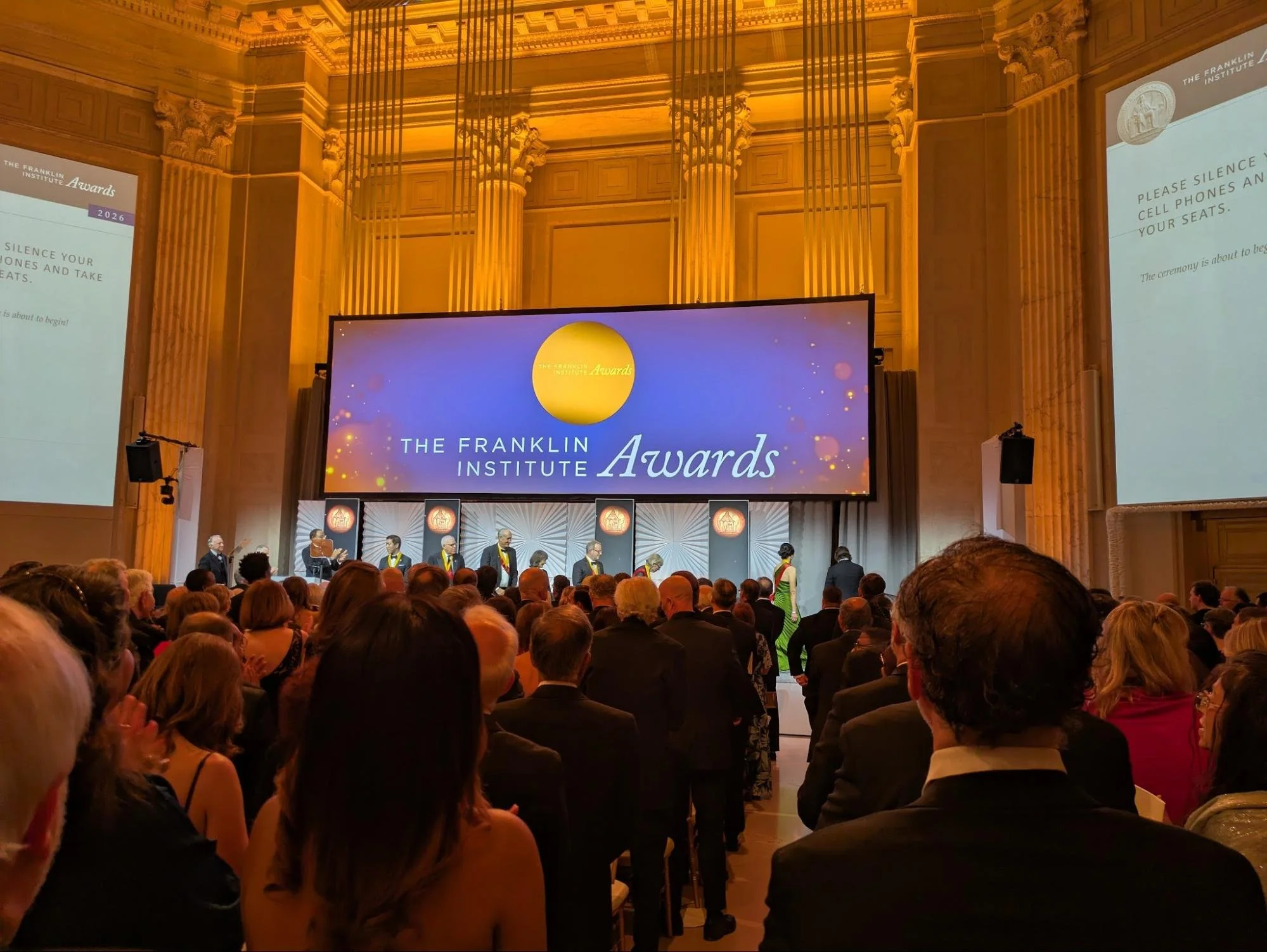
The Franklin Institute Awards
Celebrating inspiringly creative solutions in science. A reminder that creativity drives discovery in every field, not just the arts.
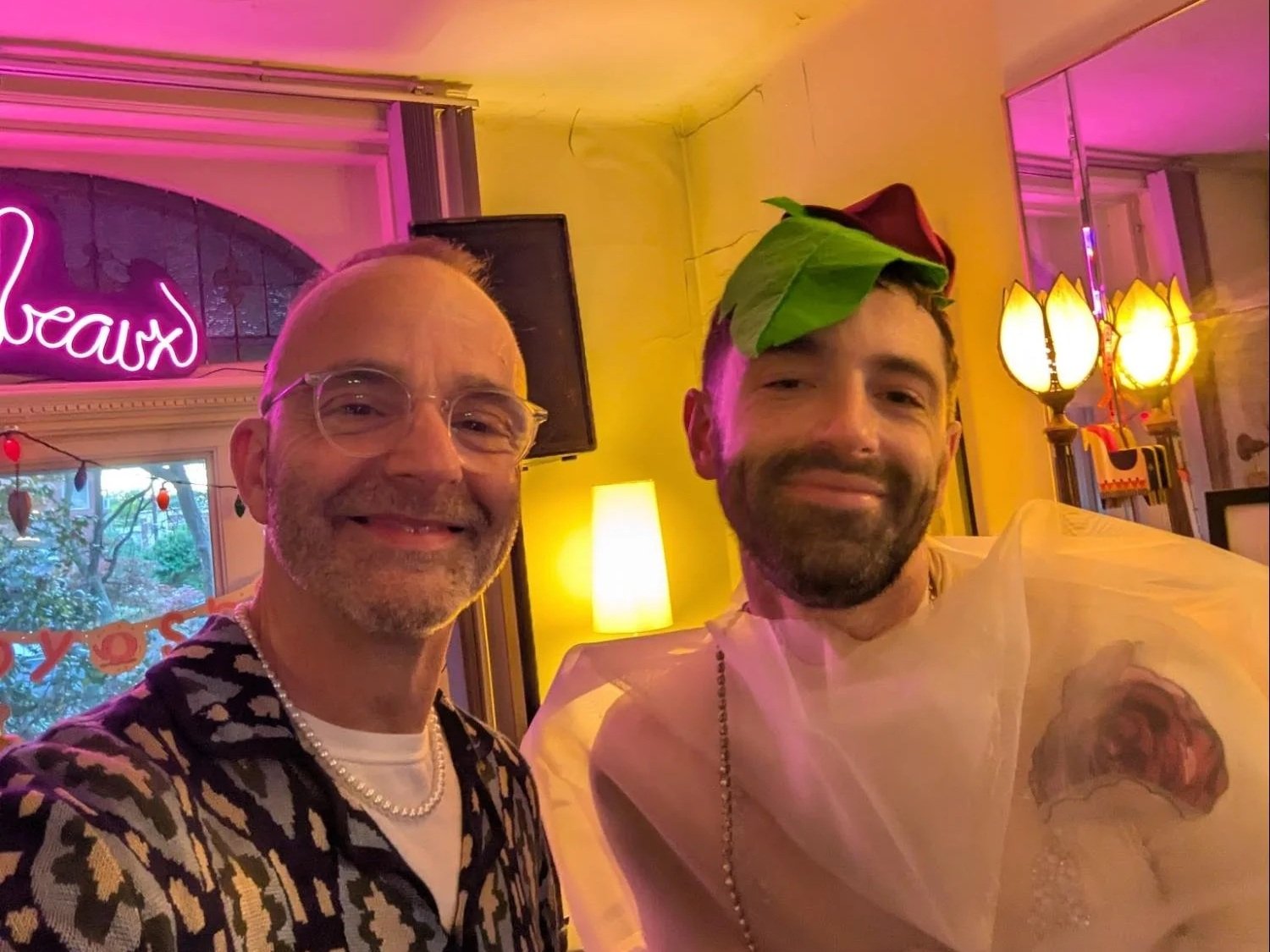
Rose Jarboe
Time spent with the founder and Artistic Director of Bearded Ladies Cabaret, an endless source of creativity and joy.
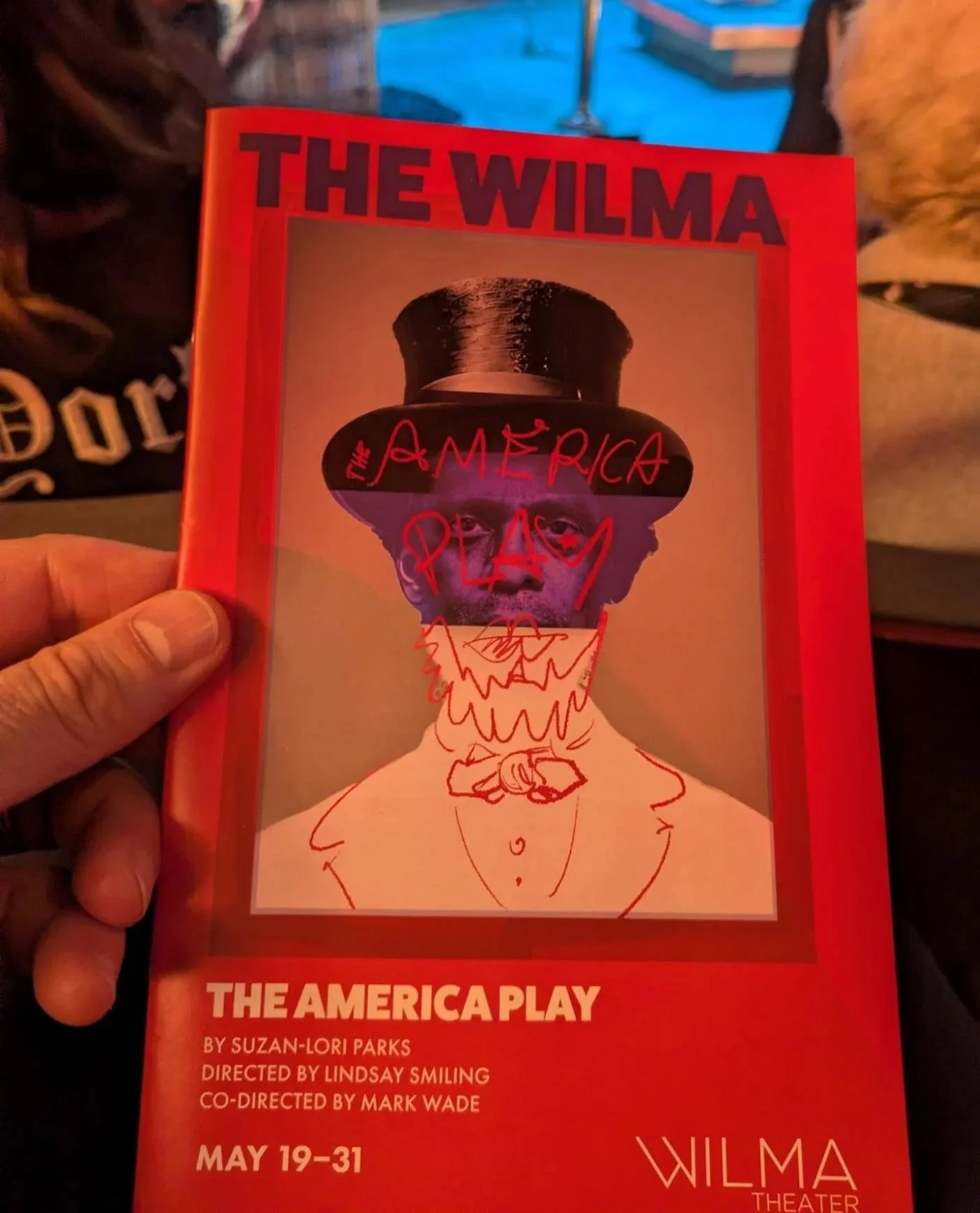
The America Play at the Wilma Theater
Opening night of Suzan-Lori Parks’s play, directed by and featuring Lindsay Smiling, who was announced that night as the Wilma’s sole Artistic Director. Let the creativity continue.
If this newsletter was useful, feel free to share it to someone who might enjoy it — or subscribe so you don’t miss the next issue.
Know Which Room You’re In
On a wilderness canoe trip, there’s no room for ambiguity. Everyone knows what they’re carrying, or you don’t make it to the next lake or river. Mission-driven leaders can learn a lot from that. In my work across arts, conservation, and journalism, I’ve seen how organizations are navigating more uncertainty than ever, including shifting funding landscapes and leadership transitions. In unpredictable, risk-averse times, being clear about everyone’s role is critical. But leaders, staff, and board members are often vague about who is responsible for what — and that vagueness is costing them more than they realize.
A Field Guide for Boards and Staff

If someone shared this with you, you can subscribe to receive future issues.
Last month I wrote about role clarity within a team — identifying who carries which pack on the portage. This month I’m zooming out one level: not who’s doing the work, but whose work it is to begin with. Metaphors help clarify the subtle, invisible dynamics that leaders can feel but rarely name. I usually reach for the backcountry, but lately a restaurant has been resonating with my audiences and clients.
Any great meal or dining experience requires a delicate balance between the kitchen and dining room. The kitchen belongs to the staff. It’s where the organization’s mission gets made and the work gets done. The dining room is shared, communal space — it's where the meal meets the people it's for. Board members don't cook, but they set the table, work the room, and make sure the restaurant is the kind of place people return to. They steward the experience, the relationships, and the long-term health of the house.
Both rooms are essential, and everyone in the restaurant cares about the mission. But when roles and expectations aren’t defined, people can wander. And that’s when the meal falls apart.
Here’s how to make sure that everyone knows which room they’re in.
The Problem
While the staff is hired for their specific expertise and experience, boards are typically volunteers. Staff may not fully understand the nuances of the board’s mandate, while trustees may need more training and direction on their duties.
Board members typically have a strong instinct to help, which is great. But too often that “helping” looks like hovering, second-guessing, or micromanaging the staff cooks in the kitchen. Or maybe the board is completely hands off and uninformed about what happens beyond the dining room walls.
Part of the staff’s role is to “manage up,” and make sure that the board has all of the information it needs to do its job. But the folks leading operations often don’t understand exactly what governance looks like.
Governance is the board's job: setting direction, stewarding mission and finances, hiring and evaluating the chief executive. Staff who haven't seen it done well treat the board as an audience to perform for or a rubber stamp to push past — cutting off the input the board exists to give. Add the "manage up" challenge of framing information for board-level decisions, not operational detail.
Finally, there’s an inherent power imbalance, because the management team runs the show, but the board is legally responsible. Board members want to protect the organization, keeping risk to a minimum, and staff want to get the job done. You can see why the kitchen door gets proppedopen in ways nobody intended.
Ultimately, the goal is for the staff and board to work in tandem — in a way that’s mutually beneficial and keeps everyone clear about which room they’re in.
A Helpful Tool: Responsibility Charting
Tough questions arose after a recent talk I gave to Leadership Philadelphia. One board member of an arts organization worried that the leadership’s artistic programming choices weren’t yielding sales results. But to alter the programming, the board member would have to go into the kitchen. I suggested the staff create a dashboard with the critical artistic criteria for repertoire selection, revenue coverage by show, casting priorities, and production availability. This would help everyone understand how decisions are made and identify shared priorities.
An executive director I worked with was resentful that their board was not more strategic. But they centered every board meeting around operational reports and never carved out time for governance conversations about mission, risk, and succession. The board had grown passive, approving things without really governing. The executive director opened the door and led them into the kitchen and then wondered why they weren’t helping in the dining room.
There are many types of approaches to tackle these challenges, but I typically use the RACI method. RACI lists key decisions or deliverables and assigns people in one of four categories:
Responsible (ensures the right process and workflow are in place)
Accountable (one person with the ability to approve)
Consulted (input sought before the decision)
Informed (kept up-to-date after)
The discipline of the exercise is that only one person or entity is accountable for any item and one is responsible for the work completion — which forces the kind of specificity that good intentions rarely produce on their own. Suddenly, "we share responsibility for fundraising" becomes "the executive director has approval for the plan, the development director is responsible for execution, the board chair is consulted on major donor strategy, and the full board is informed quarterly."
The lines almost always blur in the same places: fundraising, CEO evaluation, crisis communications, and major programmatic pivots. RACI gets them straight on the table.
In Practice: One Move to Consider this Month
At the top of your next board meeting ask: "Which questions on tonight’s agenda belong in the dining room, and which belong in the kitchen?" Five minutes. Watch what surfaces.
Monthly Inspirations: Performances & Events Feeding My Thinking
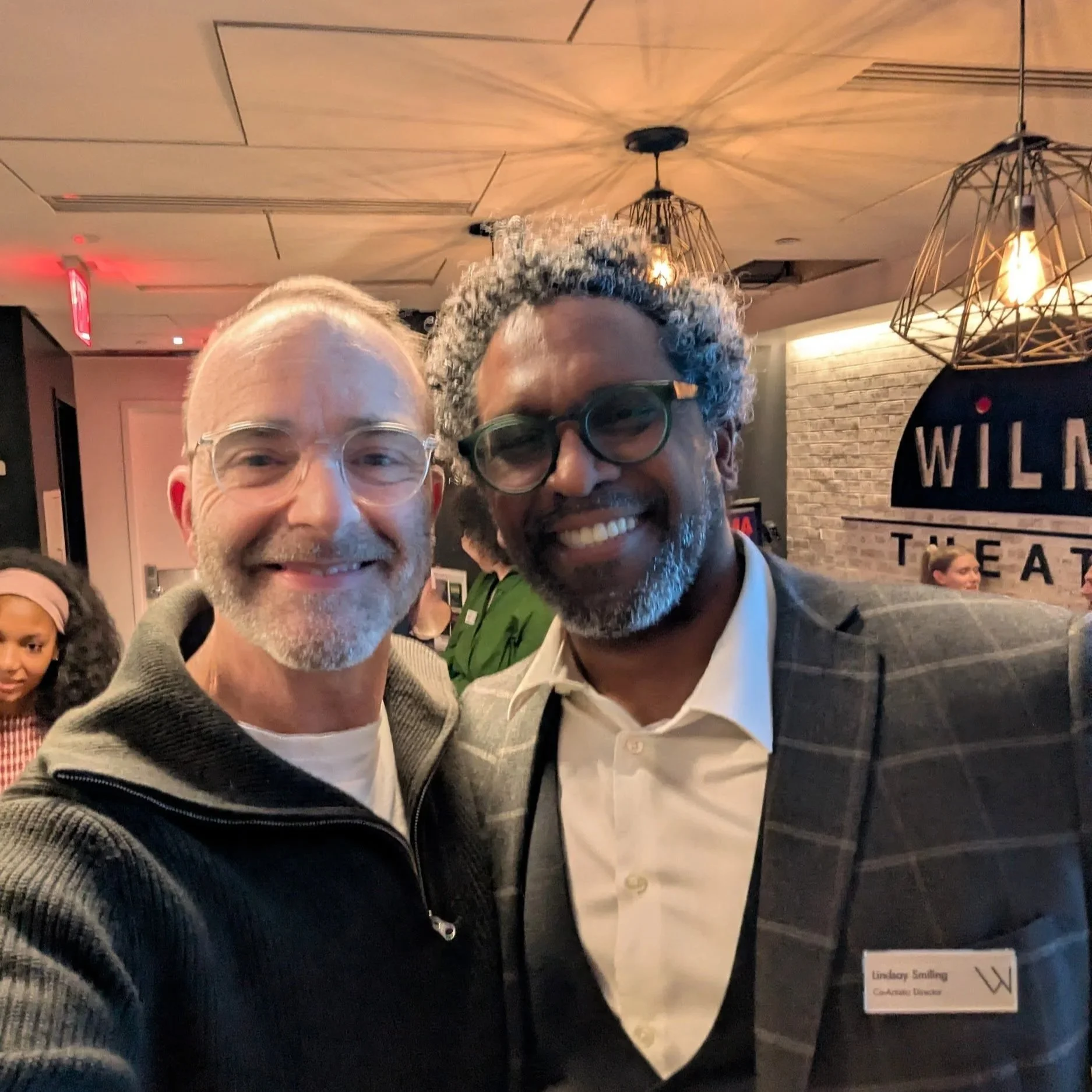
The Most Spectacularly Lamentable Trial of Miz Martha Washington
Opening night of James Ijames’s incredible play featuring the Hot House ensemble.
Here with Co-Artistic Director, Lindsay Smiling.
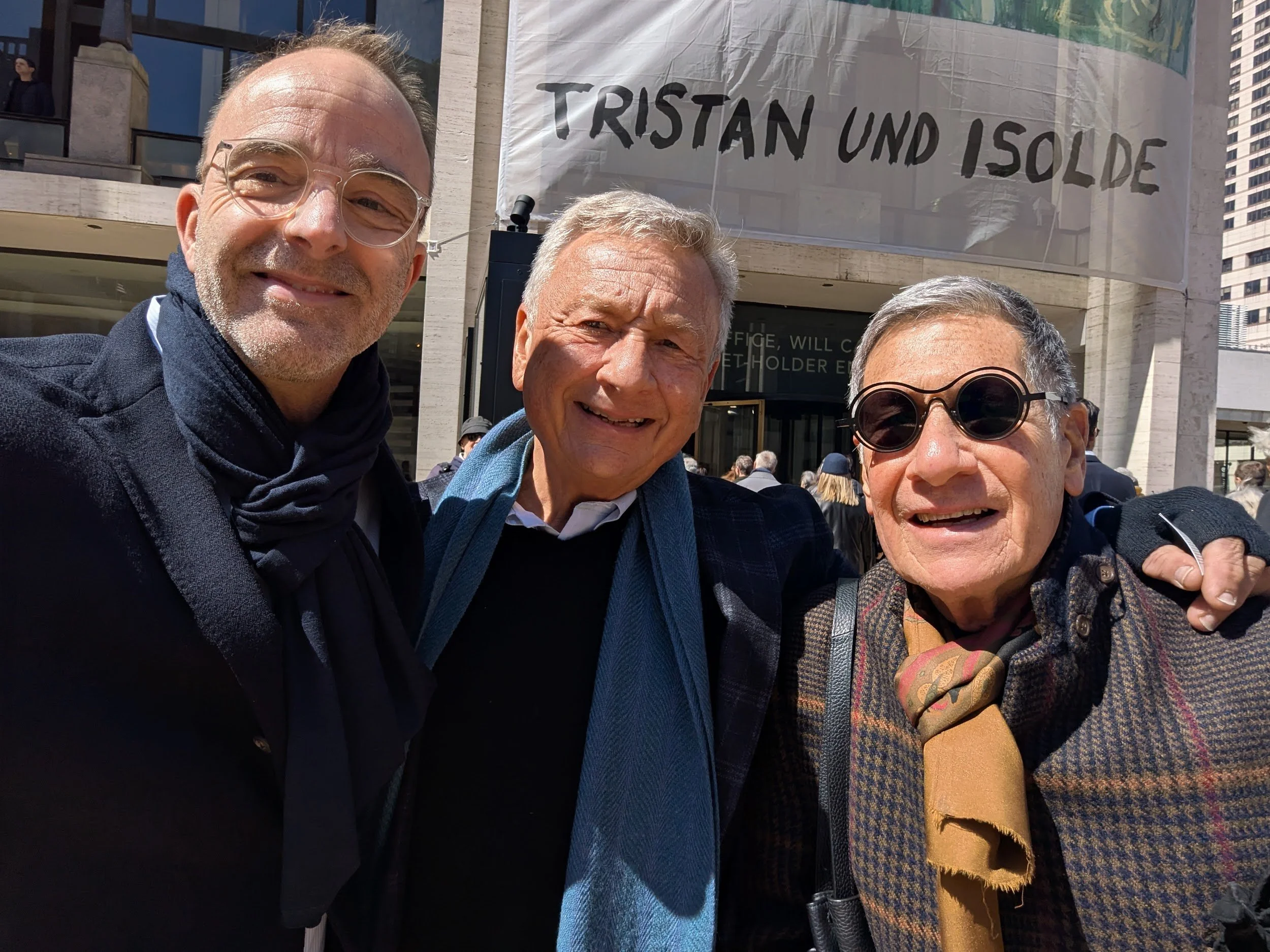
Tristan und Isolde
Life-affirming and spectacular production and performance with dear friends. Bravi tutti.
With John Pscolar and Alan Sandman at the Metropolitan Opera.
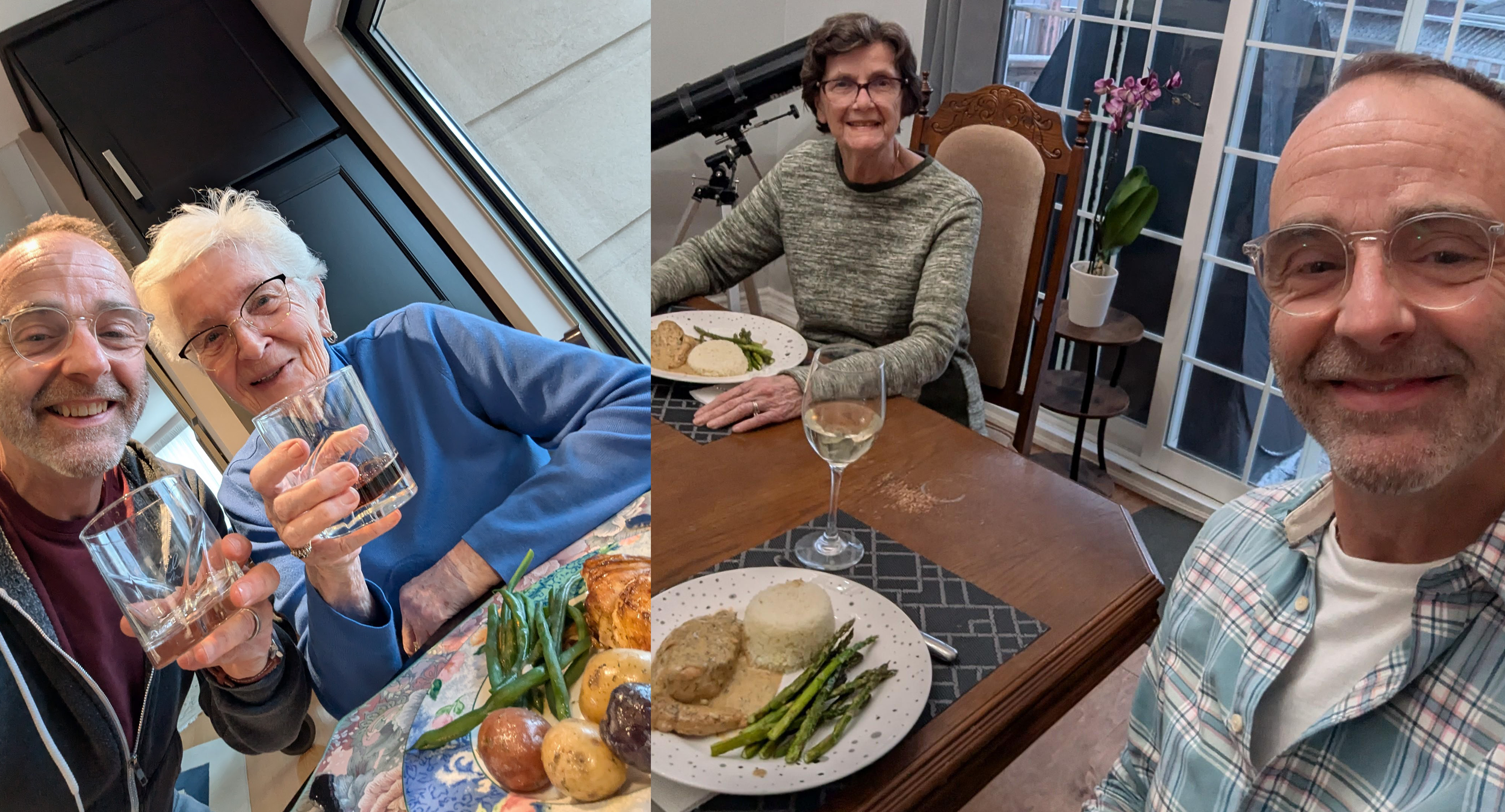
A Weekend With My Moms
In honor of Mother’s Day moments with my mother-in-law and mother for their birthdays in April in Canada.
With Gert Dubbeldam in Burlington, ON, and Zita Devan in Lindsay, ON. I cooked both meals — kitchen and dining room.
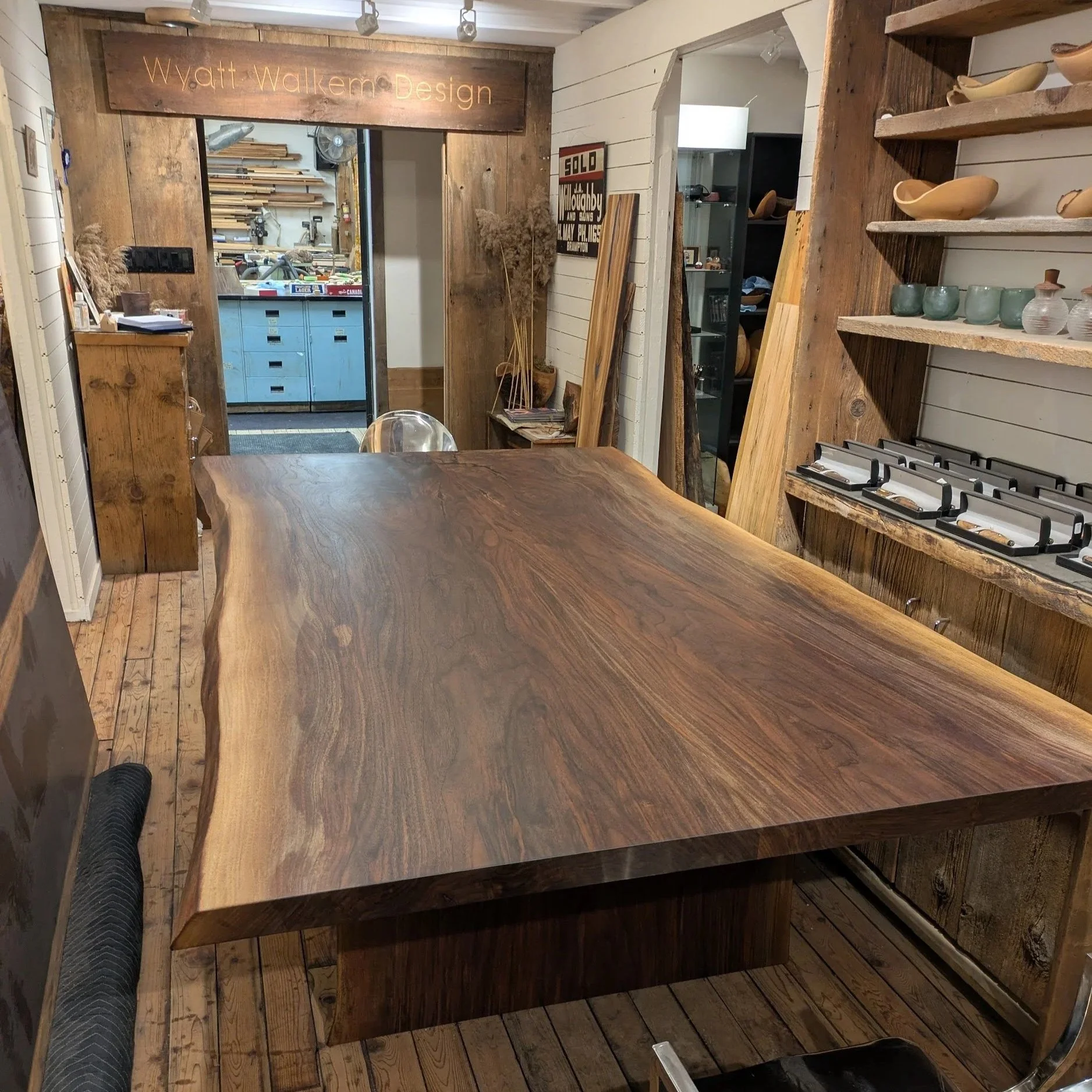
My New Dining Table
My new live-edge dining room table was created by Wyatt Walkem at his studio in Ontario, Canada. And now it’s up to me to gather the right people around it to give it life.
If this newsletter was useful, feel free to share it to someone who might enjoy it — or subscribe so you don’t miss the next issue.
Who’s Carrying the Canoe?
On a wilderness canoe trip, there’s no room for ambiguity. Everyone knows what they’re carrying, or you don’t make it to the next lake or river. Mission-driven leaders can learn a lot from that. In my work across arts, conservation, and journalism, I’ve seen how organizations are navigating more uncertainty than ever, including shifting funding landscapes and leadership transitions. In unpredictable, risk-averse times, being clear about everyone’s role is critical. But leaders, staff, and board members are often vague about who is responsible for what — and that vagueness is costing them more than they realize.
How Role Clarity Moves Everyone Forward Together

If someone shared this with you, you can subscribe to receive future issues.
On a wilderness canoe trip, there’s no room for ambiguity. Everyone knows what they’re carrying, or you don’t make it to the next lake or river. Mission-driven leaders can learn a lot from that. In my work across arts, conservation, and journalism, I’ve seen how organizations are navigating more uncertainty than ever, including shifting funding landscapes and leadership transitions. In unpredictable, risk-averse times, being clear about everyone’s role is critical. But leaders, staff, and board members are often vague about who is responsible for what — and that vagueness is costing them more than they realize.
When you double-carry, you feel every extra step.
Decades ago, six of us embarked on a seven-day trek across seven lakes in Northern Ontario’s Temagami backcountry — the kind of trip where your only neighbors are loons and the occasional moose, and cell service is a distant memory. We were mostly first-timers, full of enthusiasm but short on planning. The canoeing part was easy. Our difficulties began once we got to the first landing, or portage. In Canada, portage trails connecting lakes and rivers are not paved walkways but rocky, muddy footpaths once used by First Nations peoples for hunting and travel. The group had to carry everything — canoes, food barrels, and camp gear weighing up to 80 pounds each — across challenging terrain to get to the next body of water. We made the mistake of not assigning jobs in advance, so when we arrived onshore everyone ran to grab something and started walking to the next lake. Because the group left some of the gear behind, we were forced to double-carry — and had to go all the way back to the first landing to get the rest. Everyone was responsible for everything, and we exhausted ourselves with our inefficiency.
After two such portages, we realized we needed to take a different approach. Every camper would need to take responsibility for a certain part of the trip. We each asked ourselves, What skills do I have, and what am I capable of executing successfully? One camper claimed the tent and sleeping gear — they were an experienced backpacker and knew exactly how to strap it all together. I took the bulky food barrel, trusting a pair of legs strengthened by decades of ice skating to handle the weight. Two others hoisted the canoe onto their shoulders — hockey players with the kind of balance you can’t teach. For the first time, we all left the landing together, walking single file down the trail with nothing left behind.
Over the years, we learned to spend enough time at the first landing to ensure that each camper knows their responsibility. This extends to the campsite, where everyone has an assigned role, and gets to work on their job immediately. I’m always the cook, so I prepare the meals. Somebody else takes charge of the gear, another camper finds firewood, and another sets up the tarps. The time we would’ve wasted on doubling back is spent enjoying each other’s company around the campfire. Of course, we help each other get our packs on and step up when our friends need assistance. But designating one person to be responsible for each item makes the trip so much easier.
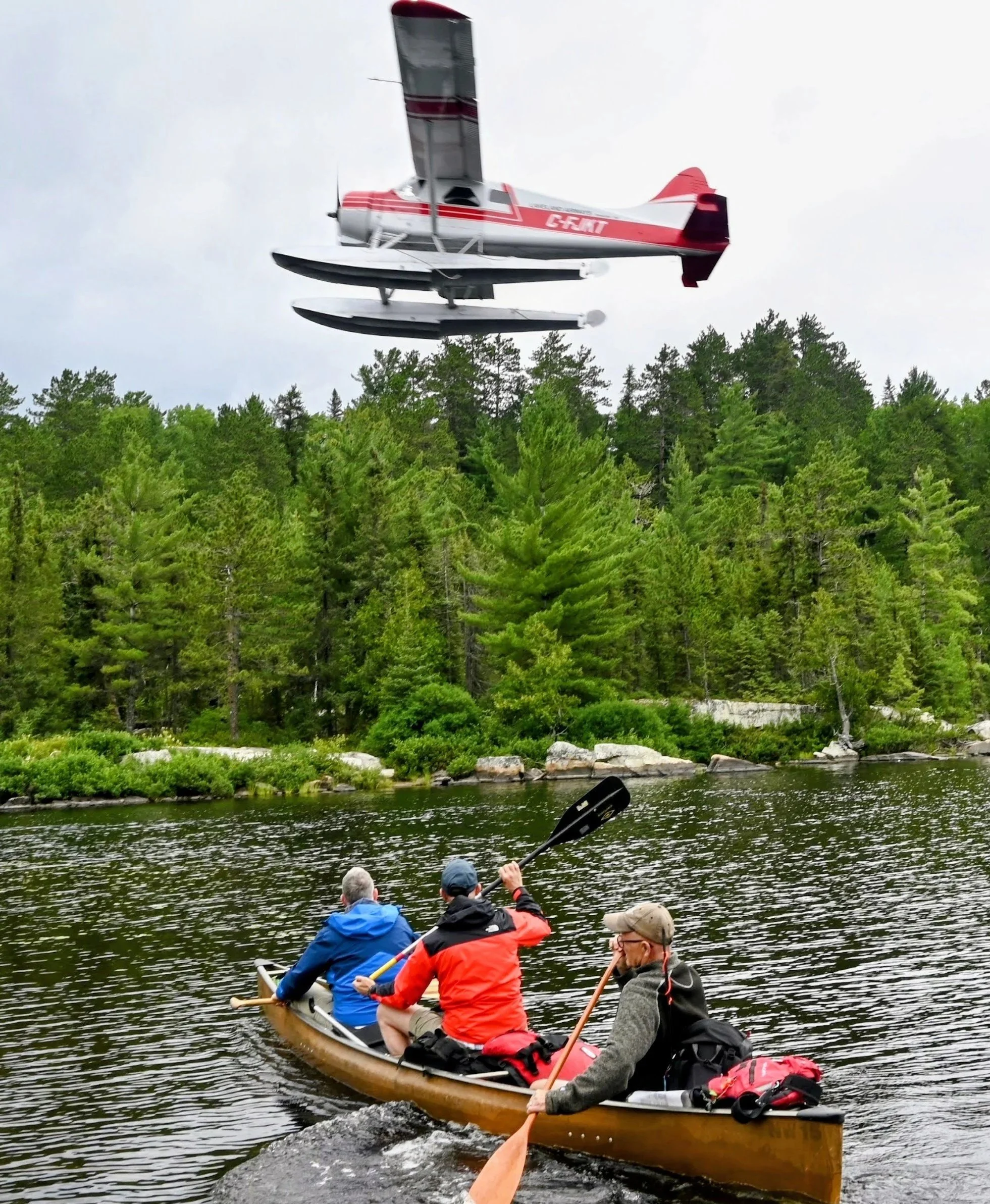
I even named my company Portage & Practice to show how backcountry canoeing informs my approach to leadership consulting.
From front to back of canoe: Rev. David A. Dubbeldam (husband), David B. Devan (me), and Dan M. Clarke (canoe buddy for 30 years) in Temagami Wilderness Area.
Float plan drop off provided by Lakeland Airways Ltd.
Your organization has a portage too.
As a mission-driven leader, you’ve identified your mission and have a strategic plan to achieve it. During good times, your team is all in the canoe paddling together — and responsibilities are just clear enough that you think you’ve got it all figured out. Then you reach the portage. It might be a crisis — your headliner gets sick, a big grant falls through. But it doesn’t have to be. Sometimes the portage is simply the next big thing your organization needs to do well — a technology infrastructure that actually connects your teams, a strategic plan that demands real coordination across departments. The trail ahead is long, the gear is heavy, and you need everyone moving forward together. That’s when vagueness costs you. If you haven’t been specific about who is responsible for what — and especially who is responsible for making sure it all fits together — your team ends up double-carrying. Multiple people grab the same pack. Gear gets left at the landing. Everyone is working hard, but the group isn’t making a single, clean carry to the next lake.
Assign responsibility before you hit the trail.
I recently worked with the leadership team at a major arts festival on something every mission-driven organization cares about: patron experience. The marketing team was shaping it. Development was shaping it. Front of house, facilities, even the team managing artist interactions after performances — they were all shaping it. But no one had been designated as the single person responsible for making sure all of those pieces came together as one seamless experience. It’s the difference between everyone on the portage trail carrying their own pack, and having a trip leader who makes sure the whole group moves forward in a single carry. Each person still owns their load, but someone stands at the shore, looks at the full picture, and confirms that every item is accounted for before the group sets off. Once we named that role at the festival — one senior leader responsible for connecting all the parts — we created the conditions for something new. The individual leaders didn’t lose ownership of their pieces. They gained a clearer view of how their work connects to everyone else’s. Ideas that used to get stuck between departments now have a path forward. And the organization is set up to deliver the kind of coordinated, integrated experience that matches the quality of what’s happening on stage.
In Practice: One Move to Consider this Month
Name one thing your organization must deliver well right now. Who is responsible for it — really? If more than one person comes to mind, that's your signal to clarify — before you hit the trail.
Monthly Inspirations: Performances & Events Feeding My Thinking
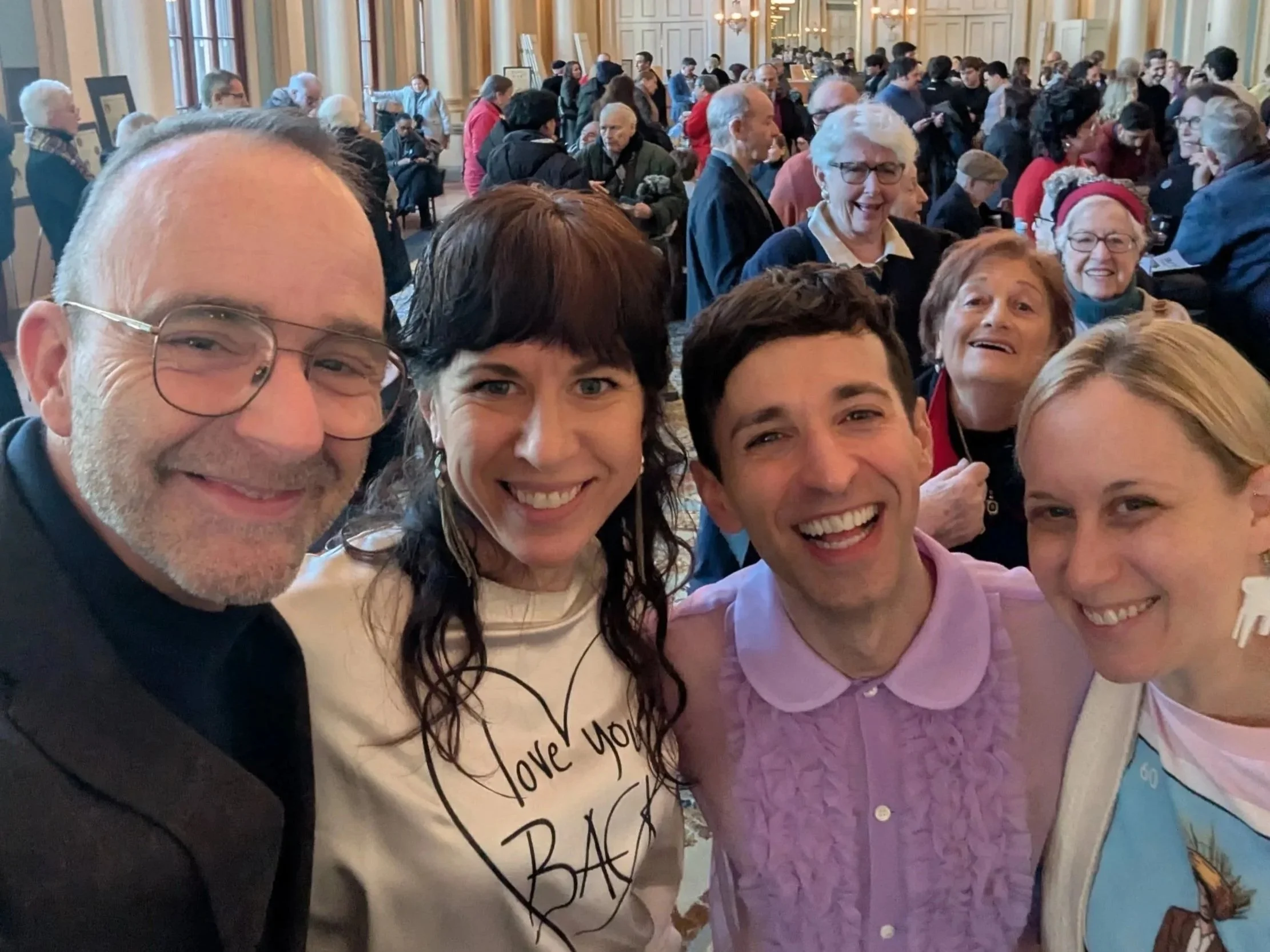
Complications in Sue
This compilation by 10 composers and one brilliant librettist was audacious and occasionally outrageous. Perhaps most impressive was how each composer’s voice was evident but they all worked together cohesively. A perfect representation of role clarity in collaboration!
With Missy Mazzoli, Anthony Roth Costanzo, and Jessica Mazzoli at Complications in Sue.
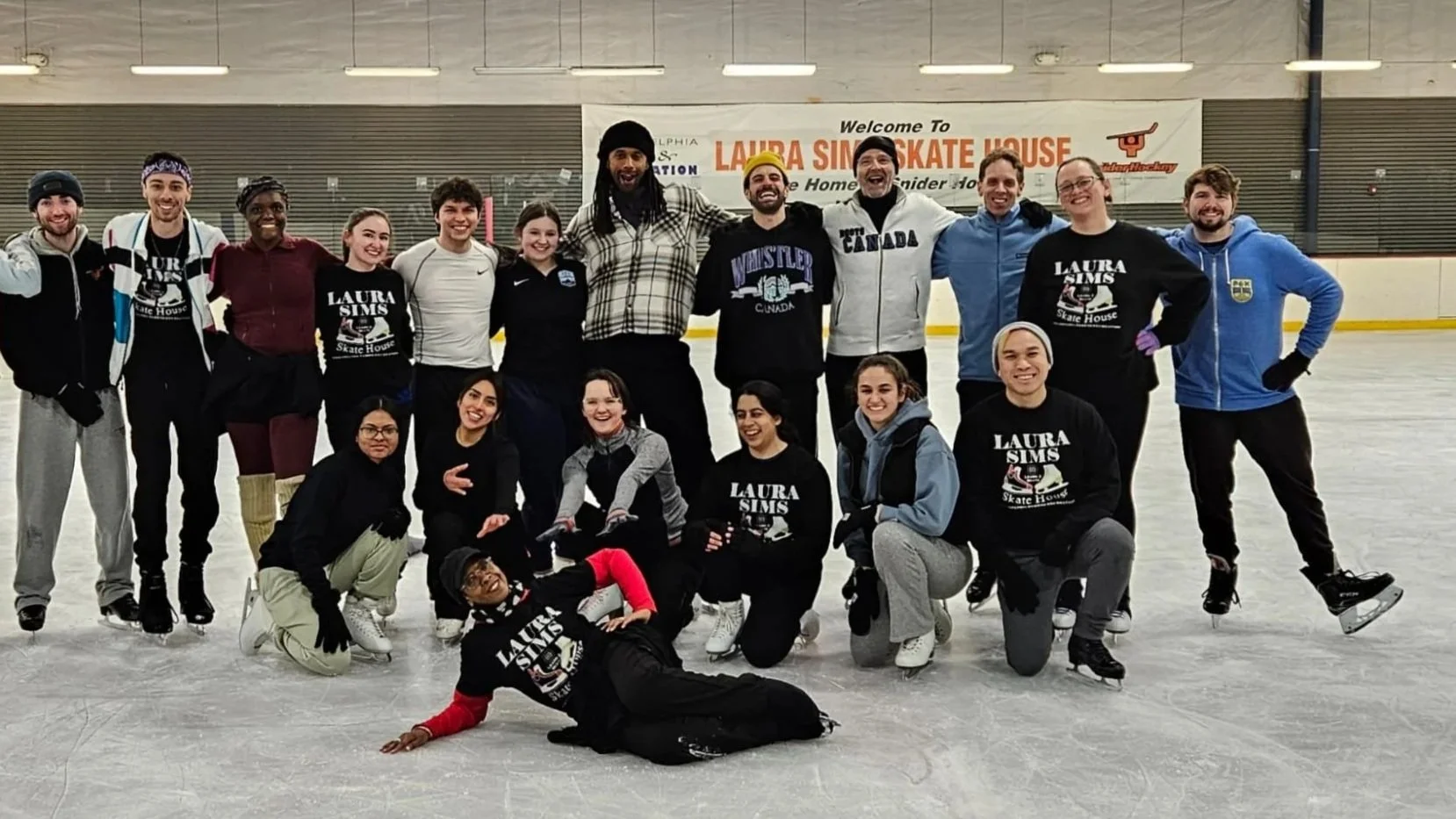
Ice Skating Seminar by Le Patin Libre
I skate most weekends in Cobbs Creek, and was thrilled to participate in a session by this pioneering Montreal-based contemporary ice skating company. We practiced a type of ensemble skating called flocking — a fun reminder that even longtime solo skaters benefit from understanding their role in an ensemble.
Flocking practice with Le Patin Libre at Laura Sims Skate House in Cobbs Creek.
50th Anniversary Events for William Way LGBT Community Center and Philadelphia Gay News
As some try to erase the LGBTQ community, celebrating milestones for these legendary institutions is a radical act of community. I was lucky enough to sit with founders of both organizations, which filled me with so much joy and resolve as I reflected on the challenges we’ve overcome over the last half century.
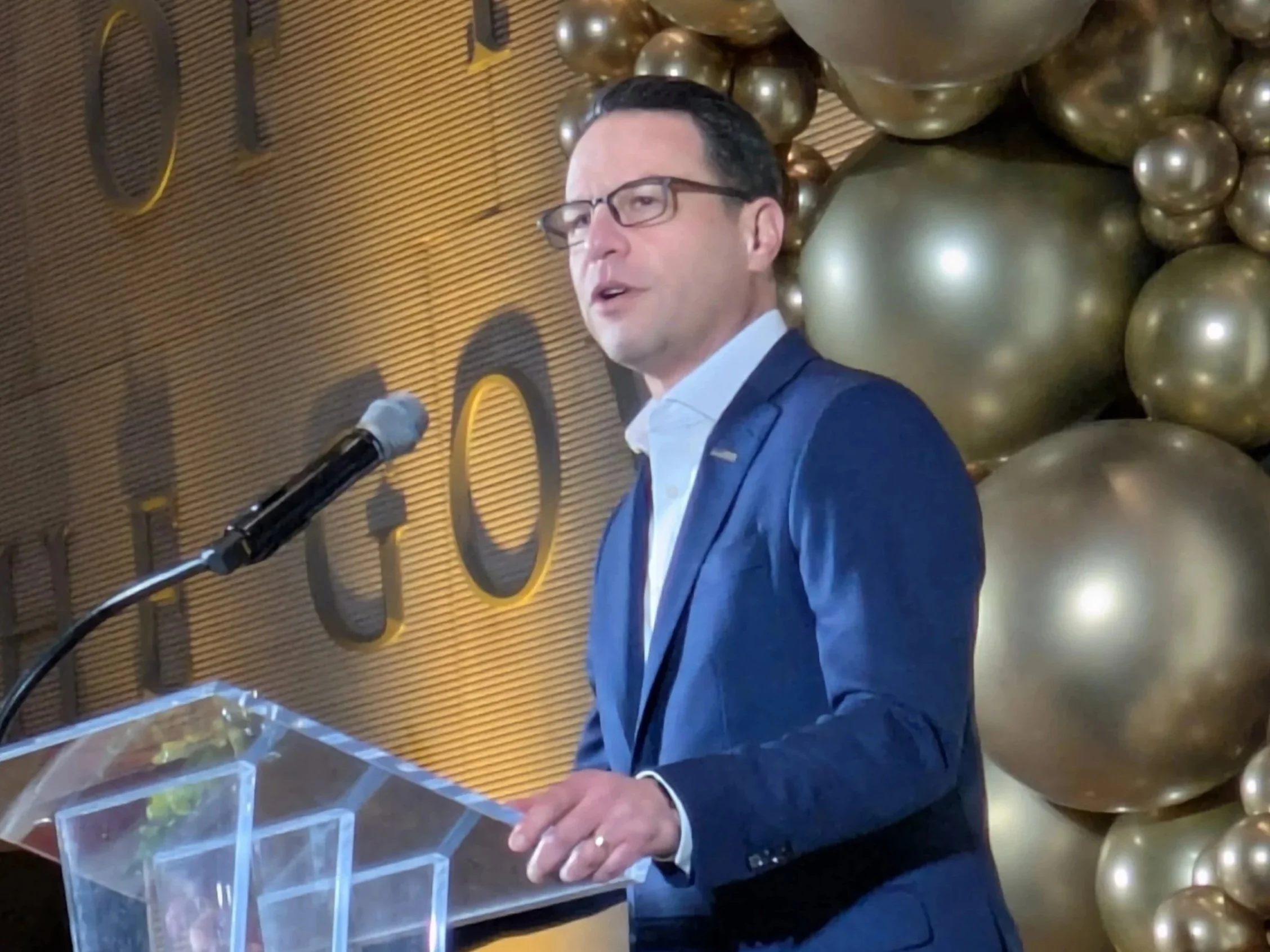
Pennsylvania Governor Josh Shapiro speaking at the 50th anniversary celebration of Philadelphia Gay News.

The Bread Room
My husband is allergic to gluten, so I can’t bake bread at home. Thankfully, I’ve discovered the best bread place in Philadelphia. When you walk into Ellen Yin’s new spot it feels like you’re in a community gathering place, which is the best part of coming together to share food with one another.
Pullman bread from The Bread Room with farm fresh eggs — YUM.
If this newsletter was useful, feel free to share it to someone who might enjoy it — or subscribe so you don’t miss the next issue.
Break to Build: The Creative Destruction Every New Beginning Requires
If someone shared this with you, you can subscribe to receive future issues.
I launched my consulting firm Portage & Practice in 2024 to help leaders navigate strategic challenges with field-tested solutions that last. Since then, I’ve worked with organizations across dance, theater, journalism, and conservation. They have different missions, but one common thread: they exist to put joy out into the world through art, nature, information, or beauty.
Yet their leaders often operate from scarcity — strapped for time, resources, and the capacity to think beyond survival. And that’s the problem: you can’t build a thriving organization from a scarcity mindset.

If someone shared this with you, you can subscribe to receive future issues.
I launched my consulting firm Portage & Practice in 2024 to help leaders navigate strategic challenges with field-tested solutions that last. Since then, I’ve worked with organizations across dance, theater, journalism, and conservation. They have different missions, but one common thread: they exist to put joy out into the world through art, nature, information, or beauty. Yet their leaders often operate from scarcity — strapped for time, resources, and the capacity to think beyond survival. And that’s the problem: you can’t build a thriving organization from a scarcity mindset.
One solution? Creative destruction.
The theory of creative destruction was popularized in the 1940s by economist Joseph Schumpeter, who was inspired by the work of Karl Marx. It highlights the evolutionary qualities of capitalist systems, and the importance of dismantling established structures and practices to clear the way for innovation. (Think Netflix killing Blockbuster with mail-order DVDs, then destroying its own DVD business by pivoting to streaming.)
What you choose to stop is as important as what you choose to start.
So what does this theory have to do with the mission-driven world? We don’t have outside market forces making us cut languishing programs. But throughout my career, I’ve learned that you sometimes need to stop an initiative to open up thought space in your organization. Yes, it’s very uncomfortable not replacing something immediately, but that discomfort is where growth happens. When deciding what to stop, don’t just look for “bad” or failing programs. Look for the ones that never seem to work quite right, that no one wants to touch. Maybe mission creep means they don’t offer the value they once did. Or you're constantly reverse engineering success because something’s fundamentally misaligned.
Early in my tenure as General Director of Opera Philadelphia — during the recession — I made a difficult call: we cut a flagship production from the Academy of Music. It was a bold move, but it freed us to launch a chamber series, which drove commissioning and developing exciting smaller-scale work. Over time, that strategic subtraction helped position the organization as a national leader in contemporary opera. Years later, before stepping down, I made a similar choice — streamlining the opera’s signature programming to create space for new leadership to define its own direction. Ending well is also a form of creative destruction. Recently, I worked with a performing arts organization. Its model was built on a certain number of performances, but ticket sales were below expectations and finances were tight. Leaders wanted to keep the breadth of their programming intact, so I suggested they cut back on the number of performance weeks instead. The result? Fuller houses and more enriching audience connections. Theatergoers feel the difference, because a full house generates energy that elevates the entire experience. And the company freed up resources to experiment with new ideas.
How to talk to your team and board
As you begin to identify potential programs to cut, involve your staff in the conversation. Create a space for honest dialogue about gaps between your mission and reality. Keep the conversation organizational, not personal. Look at the data together to find better uses for time and resources — even if you don’t know what those look like yet. Understand that board members are not in your day-to-day, so they may misread change as a loss. Frame the conversation so they understand that you’re not cutting because something didn’t work, you’re recalibrating to capture opportunities to grow and thrive. The organizations that flourish in the next decade may be those that do less strategically and intentionally to create space for what’s next.
What are you ready to stop?
In Practice: One Move to Consider this Month
Try to identify one thing that is not thriving in your organization, then stop doing it to make room for something new.
Monthly Inspirations: Performances & Events Feeding My Thinking
Hildegard at the Prototype Festival
My husband and I kicked off my birthday weekend in New York by attending Beth Morrison Projects’ presentation of this mesmerizing new opera, with great performances and theatrical impact! I loved the material and the cleverness of the writing.
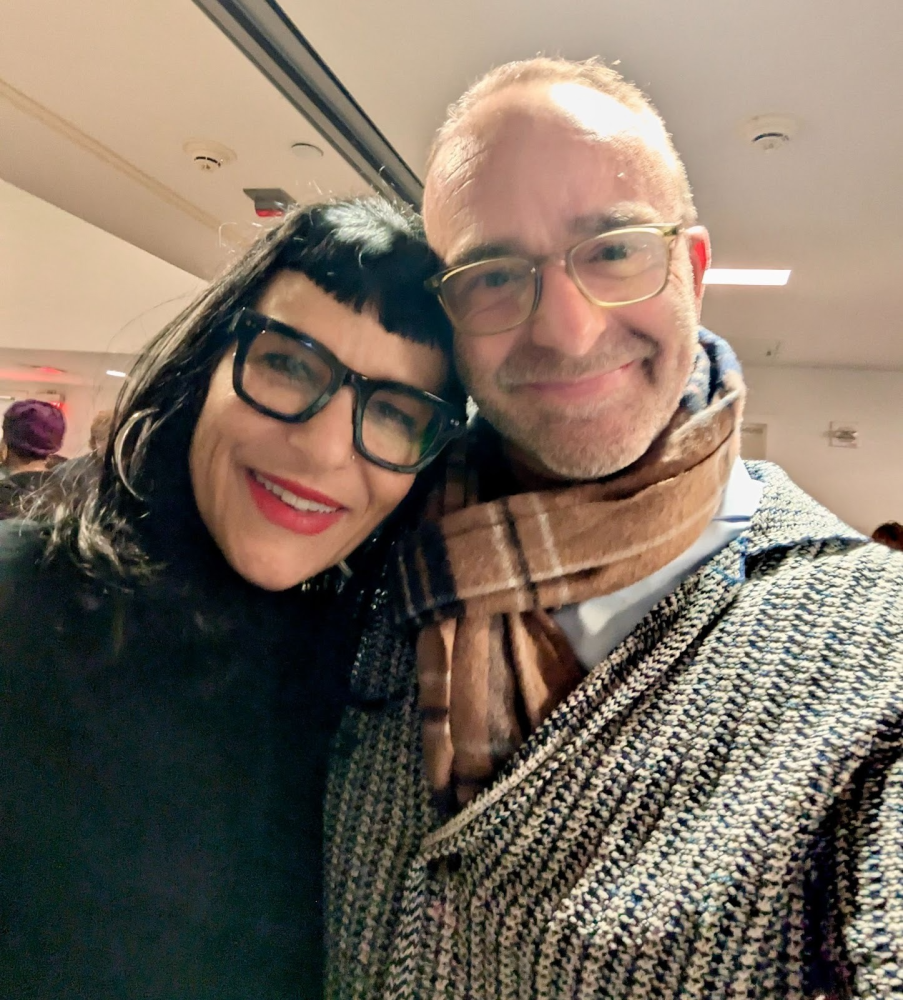
With Beth Morrison of Beth Morrison Projects at Hildegard.
I Puritani at The Met
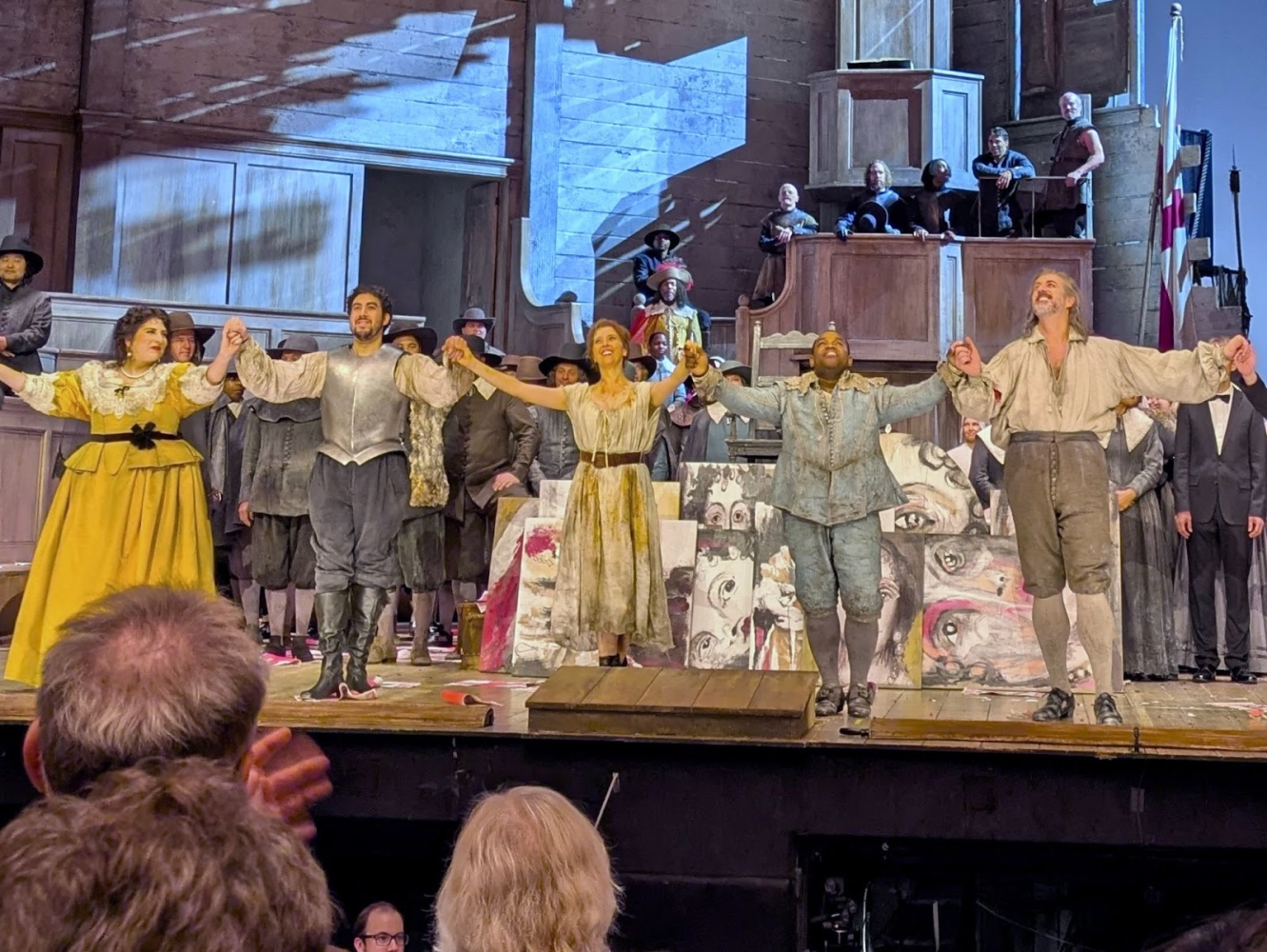
It was an utter joy to listen to the glorious, virtuosic voices of Larry Brownlee and Lisette Oropesa together — both artists I collaborated with at Opera Philadelphia. Bellini’s opera is like the Olympics of singing. The hair on my neck stands up just thinking about it!
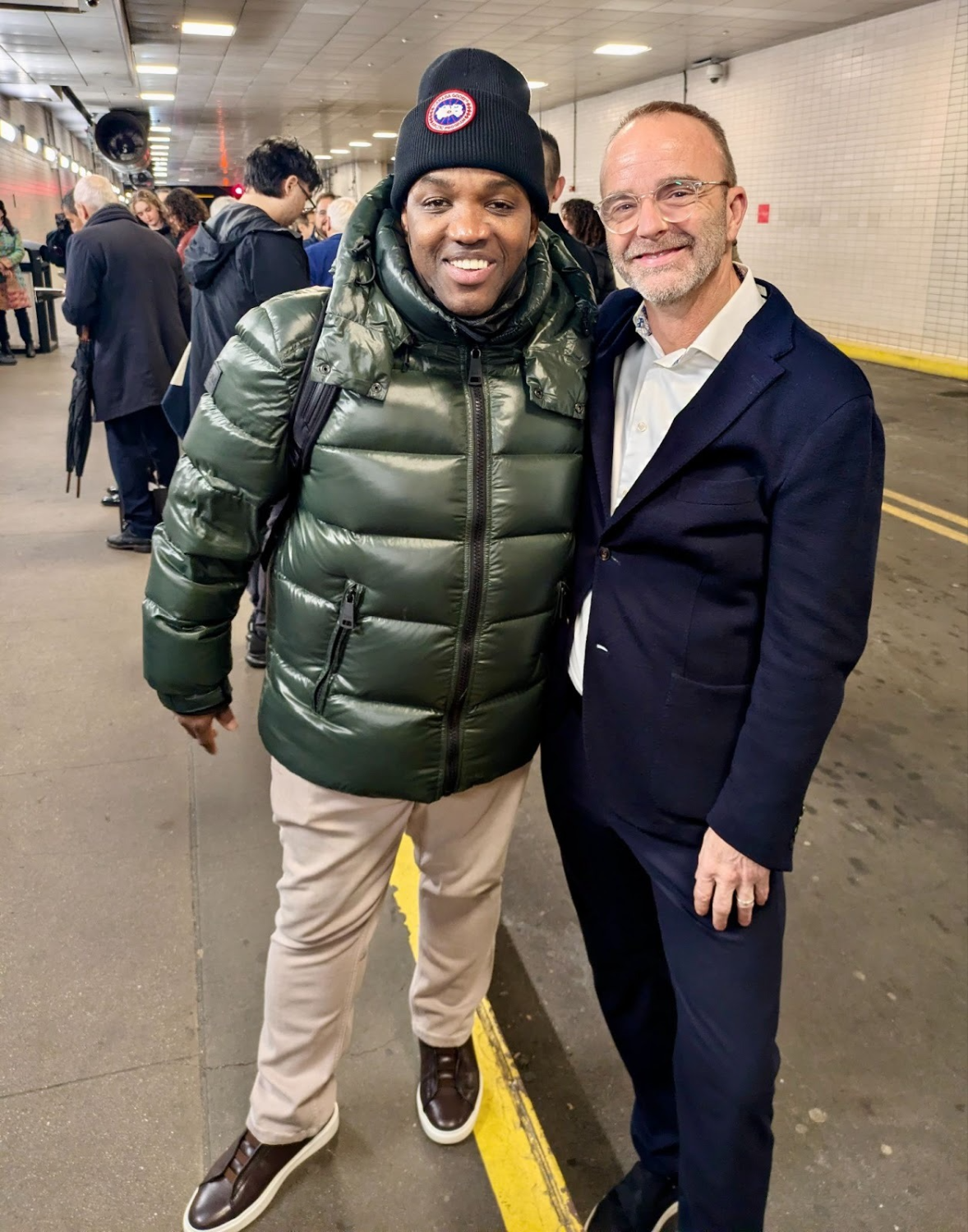
With Larry Brownlee at Stage Door at The Met Opera

Poor Judge at The Wilma Theater
A Pig Iron Production, this Aimee Mann-inspired show was conceived and developed by Dito van Reigersberg. Very sadly, Dito was unable to perform, but Pax Ressler stepped into the role and made it their own. It was just so fantastic — Pax’s vulnerability in a moment where we’re all feeling vulnerable as humans living in the U.S. felt like exactly the right thing the audience needed to start 2026.
Pax Ressler in Pig Iron's and Wilma Theater's Poor Judge. Photography by Johanna Austin.
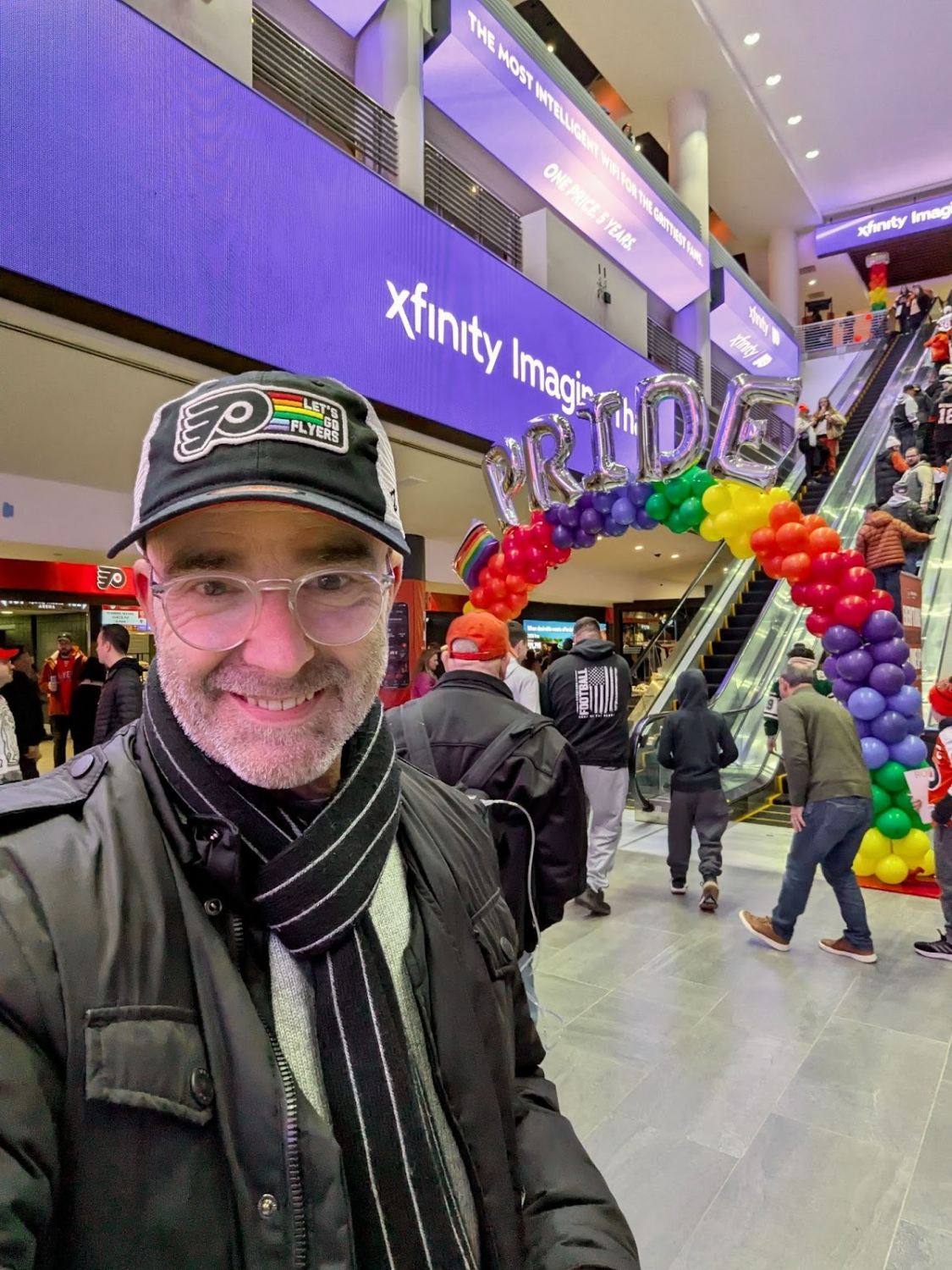
Philadelphia Flyers Pride Game
I’ve been to Pride Games before, but this year was different. Hockey is having its massive Heated Rivalry pop culture moment, which is just amazing to me as a guy who grew up as a figure skater in a small town in northern Ontario. At the same time, the LGBTQ community is under attack in so many ways. Kudos to the Flyers organization for going above and beyond to celebrate inclusivity — it was almost impossible not to walk through a rainbow arch to get to your seat!
If this newsletter was useful, feel free to share it to someone who might enjoy it — or subscribe so you don’t miss the next issue.