
This is the second in a series of three issues on the human side of moving a mission-driven organization forward. Read the first here.

If someone shared this with you, you can subscribe to receive future issues.
One of the best parts about writing this newsletter is hearing reader responses. After I wrote about the legacy of Dito van Reigersberg — aka Martha Graham Cracker, a dear friend and cofounder of Pig Iron Theatre Company — one especially insightful observation landed in my inbox:
“For most of us, the tip of the spear in leadership is ‘have ideas, make decisions.’ For Dito, it was ‘build trust, make people feel seen.’”
That’s the difference between authority and trust, and it’s one of the most important things I’ve observed in my work with mission-driven organizations. Authority gets you compliance. Trust gets you commitment.
A leader’s job isn’t to push the organization forward by having all the answers and making every decision. It’s to draw people in. That’s how you build an organization that moves ahead on its own.
Two ways to lead
One common way of leading is the authority model. Everything important hinges on the leader, who directs, assigns, and decides. This method works fine, until it doesn’t. The organization can only move at the speed of this one individual, and people’s buy-in fades over time.
The other is leading with trust. This leader focuses on making people feel genuinely seen and heard and creating conditions where they want to participate. Attraction follows from that trust: people want to be in the room, they bring their best thinking, they take risks with you, and they invite others along.
The authority-focused leader relies on hard power, whereas the trust-based leader uses soft power. The difference between them is direction. Authority is a one-way street: the leader decides, and their decision travels out to the team. An authority-focused leader can be kind, generous, and well liked, and the street still runs one way. But trust runs both ways: ideas, concerns, and commitment travel back to the leader, and the work gets better because of what comes back.
When facing a challenge, the authority-focused leader tends to push through with more effort in the same direction and with the same plan. The trust-based leader brings the original problem to their team. Together they sort out how to manage it and find a pathway through to the other side. The solution is a direct result of the team’s collective commitment, perspectives, and skills — much more than any single leader could deliver alone.
What drawing people in looks like
How can you create an environment where people stop asking for permission and start owning outcomes? It starts with leaders making room for other people’s ideas. That includes asking questions before offering answers, being the last person to speak instead of the first, and following up on what people suggest.
Leaders may see themselves as collaborative, but they also feel pressure to have all the answers. When an urgent issue arises, they want to solve it quickly, so they come into a room telling rather than asking. The problem is that once they speak, everyone falls in line and the collaboration ends before it starts.
I first worked with Pig Iron a decade ago, when a similar process helped it land on its purpose: to change American theater. I recently facilitated a strategic reset with Pig Iron’s staff, leadership, and board. The organization is at an inflection point following Dito’s passing, and Pig Iron’s leaders want to create conditions where everyone can do their best work. The last thing they want is to hand down decisions without everyone’s input.
We started by getting everyone aligned with the emotional and psychological logic of the organization, or the mission. Next we’ll align with the economic logic, which is the strategy. And then from there we’ll start translating it into operations.
When you do that well, you’re creating an environment for people to move things forward. And this isn’t limited to transitional periods. It’s a day-to-day practice.
Why this is more important — and more challenging — for mission-driven organizations
Unlike for-profit companies, which have a financial bottom line that creates clarity, mission-driven organizations run on human energy. And that energy can be drained by a culture of authority where people are standing around waiting to find out what to do. Leading with trust is critical in mission-driven organizations, because the people are the engine.
What comes next: The Joy Imperative
Once people are drawn in, what keeps them moving when the work gets hard? In December, I’ll make the case that joy is a strategic investment.
In Practice: One Move to Consider This Month
In your next meeting, observe whether you’re setting up the parameters and telling your team what to think. The goal is to simply state the problem, get input, and be the last person to talk. That’s a much more powerful way to lead.
Go deeper: Researchers describe two kinds of trust. One comes from the head and rests on skill and reliability. The other comes from the heart and rests on care and connection. Dito led with the second. Erin Meyer’s short piece for INSEAD is a good introduction.
Monthly Inspirations: Performances & Events Feeding My Thinking
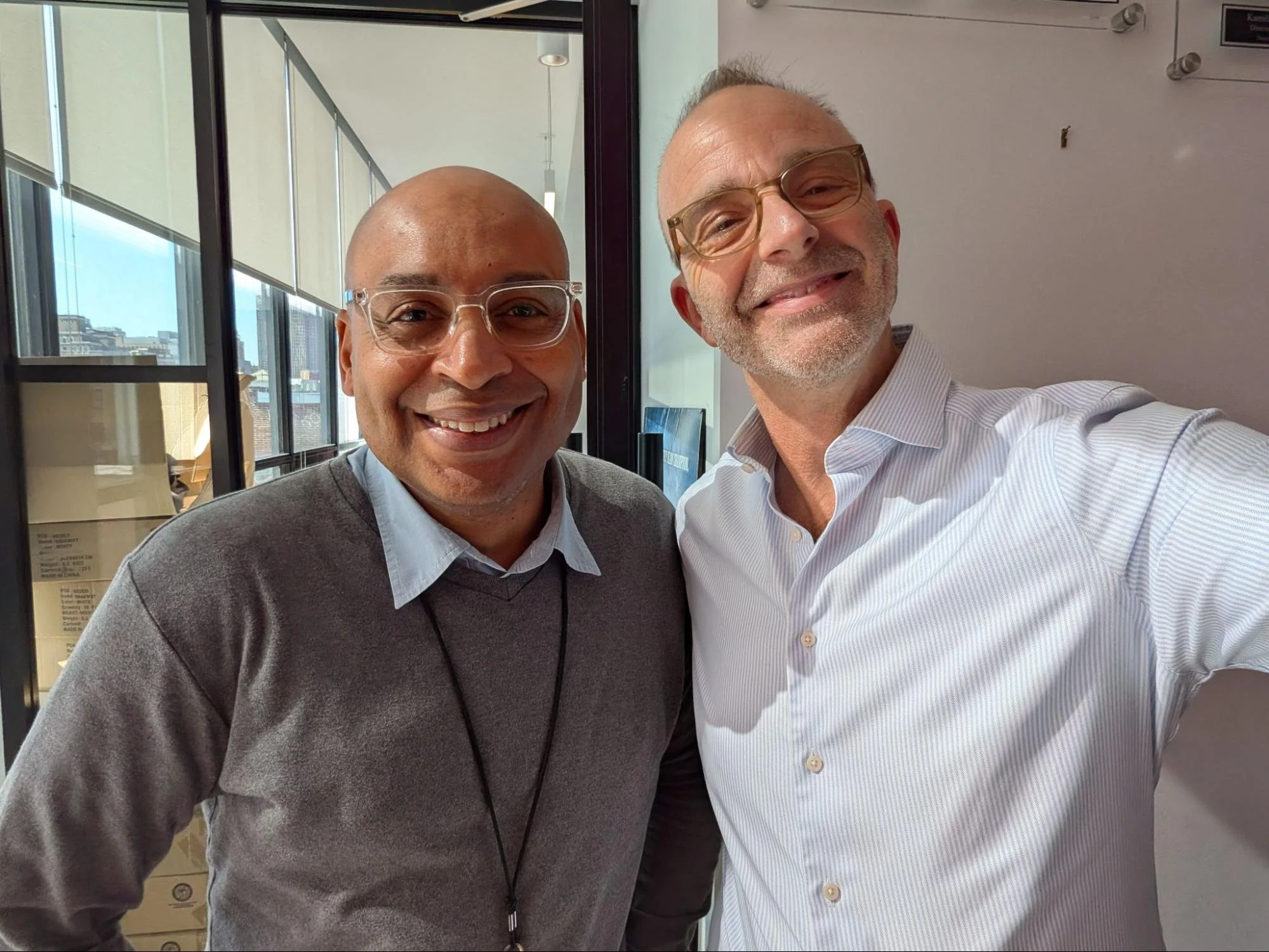
I have the pleasure of working with Kelley Girod, Director of New Works at the amazing Apollo Theater. On my last visit I had the utter joy of connecting with Dwight Jordan (left), who heads up the programming team — we’ve worked together on several groundbreaking projects. This is a special place with special people and is always a source of great inspiration.
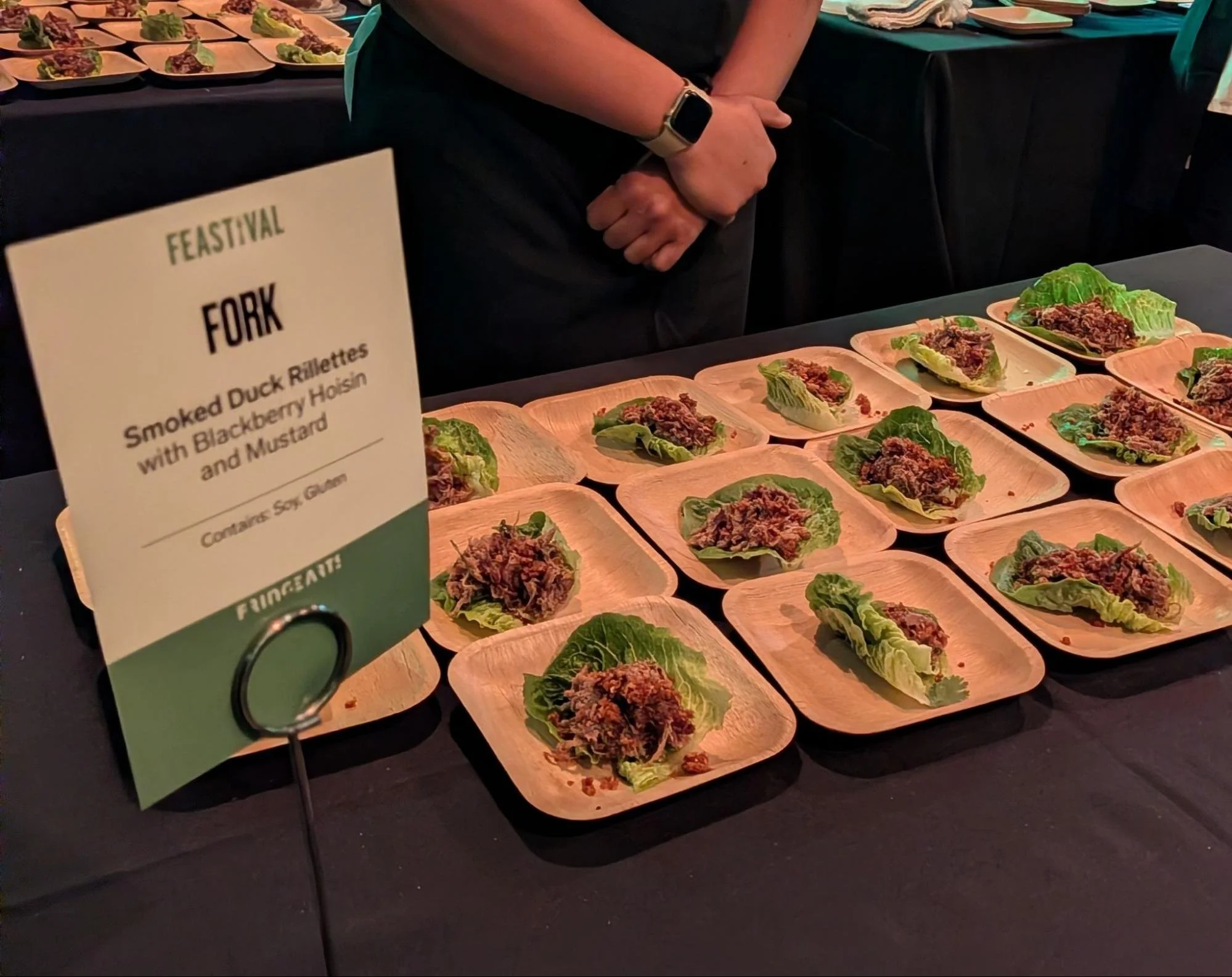
What a fun time at FringeArts Feastival — an annual celebration of food, performance art, and the energy and joie de vivre of all things Fringe in Philly. Fork, another source of inspiration and nourishment, had one of my favorite stations. Thanks, Nell Bang-Jensen and team.
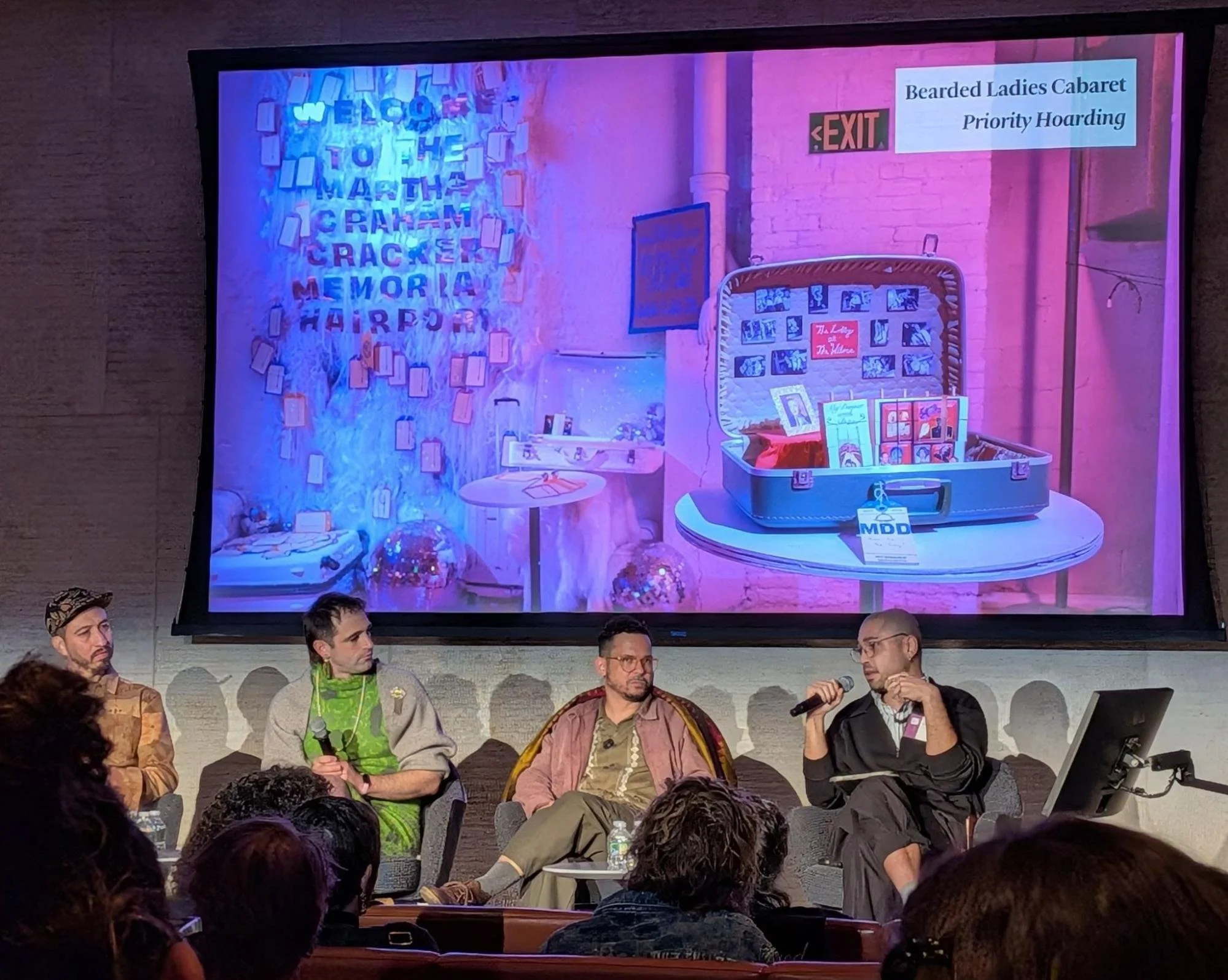
Happy to be present for On Practice: Pew Fellows in Conversation at the Barnes Foundation, with artists (left to right) George Rodriguez, Rose Jarboe, José Ortiz-Pagán, and moderator and facilitator Zach Blackwood, who is the Program Officer for Fellowships at The Pew Center for Arts & Heritage. Priority Hoarding is an inventive immersive experience by the Bearded Ladies Cabaret that continues through December 16. Highly recommended!
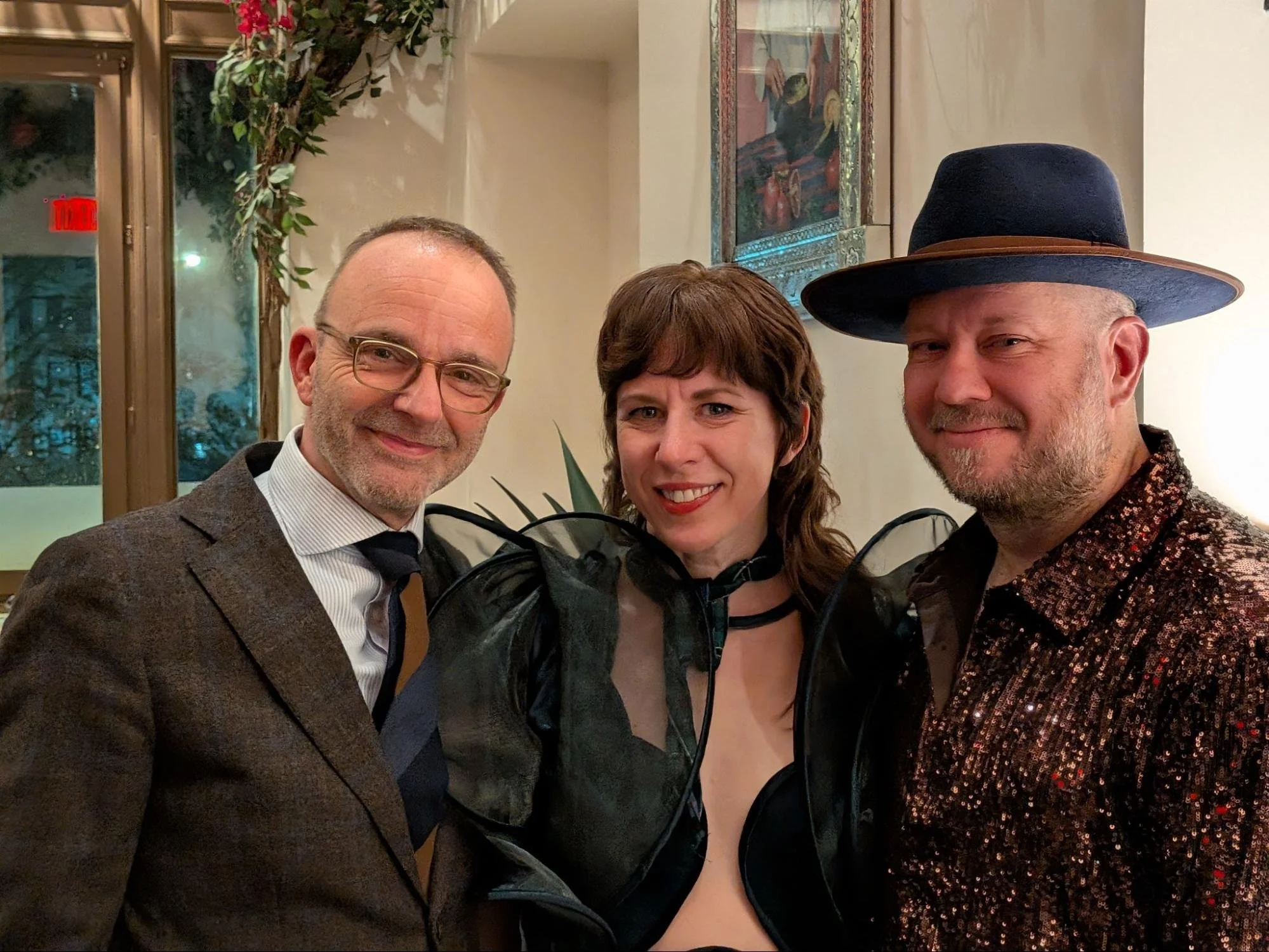
Closing night of Lincoln in the Bardo at the Met Opera by the incredible Missy Mazzoli and Royce Vavrek was personally so fulfilling. I am blessed to be a part of their origin story as an incredible opera-making team: I appointed Missy composer-in-residence at Opera Philadelphia and commissioned their great collaboration Breaking the Waves (read about Houston Grand Opera’s fantastic audio recording at the link). What a gift to the operatic and musical world they both are. And bravi to everyone who made this wondrous, enchanting, and thrilling performance happen.
Being back on the ice is a great source of joy for me. This was the first day back after four months off the ice. Clearly, I have work to do — that spin needs to be faster and lower, but it’s a good start.
If this newsletter was useful, feel free to share it to someone who might enjoy it — or subscribe so you don’t miss the next issue.